September 11, 2026 — March 6, 2027
Fabulous Neoconstantinopolitanism
Jean Randolph with John Monteith
Visible Vault Study Centre
From surface to …
La Betty began showing up in galleries in 2017, first at Regina’s MacKenzie Art Gallery and then Winnipeg’s Plug In ICA in 2018. In each case, La Betty (as curator) presented works from “her” collection to an audience along with expository didactics, leading viewers through a journey of glamour and resplendence. That the works she presented come from the permanent collection of the exhibiting galleries (or adjacent institutions) should have been a clue to the subterfuge on hand, however.
La Betty is, indeed, a character—a reoccurring one at that. Initially conjured for the MacKenzie exhibition My Claustrophobic Happiness, La Betty is part of Jeanne Randolph’s pantheon whose role is to carry the legacy of the twentieth century through to the contemporary moment. Appearing most prominently in her 2020 book of the same name from ARP books, La Betty is a contemporary St. Anthony, tempted to abandon her chosen path of surface (and consumerism) over and over by emissaries from various myths. By the careful application of the salve of advertising slogans and jingles, La Betty, in each vignette, keeps these temptations at bay, remaining happily self-isolated in her trust-fund-purchased Vancouver condo overlooking English Bay.
An earlier text of Randolph’s lays the groundwork for the development of La Betty (although once established, La Betty herself never quite develops). Appearing in the journal Architecture and Ideas in 2006, “Dr. Freud’s Nephew: How I Learned to Stop Worrying and Love Modern Poison” investigates the influence of Edward Bernays on the mediascape of the twentieth century. Nephew of Freud, Bernays essentially invents public relations (bluntly naming it propaganda before PR rebrands as the more friendly PR) by bringing psychoanalysis to advertising and, in the process, flattening out desire, and the objects of desire, in the public consciousness. In essence, Bernay’s work is a synthesis of the fetishisms of the nineteenth century—the commodity strain of Marx (wherein a commodity’s exchange value takes precedence over its use value) and the psychoanalytic one of Uncle Sigmund (or the displacement of desire onto an inanimate object).
Randolph’s vignettes are repetitions, uncanny or not, reiterating the same story over and over: The triumph of consumerist desire over, well, everything. Flatness reigns supreme. La Betty’s desires for objects come not from the objects themselves, but rather from the marketing that surrounds them. The objects themselves, however, seem to have their own agency. They, ironically, call forth the phantasms that tempt La Betty from her materialistic ways.
Her exhibition title references, in a roundabout way, Byzantine mosaics which themselves are strangely flat to Western eyes. A more thorough look at Byzantine perspectival systems, however, reveal that Byzantine images utilize an inverted perspective, composed from the viewpoint of the subject of the image. This perspectival system could be understood to have affects similar to fetishized commodities, where the subject of the image gains subjecthood and begins to speak in place of the viewer (those interested in this system of representation should consult Hans Belting’s Likeness and Presence or Jean-Luc Marion’s God without Being) … but we’re getting ahead of ourselves.
Courtesy: Jeanne Randolph.
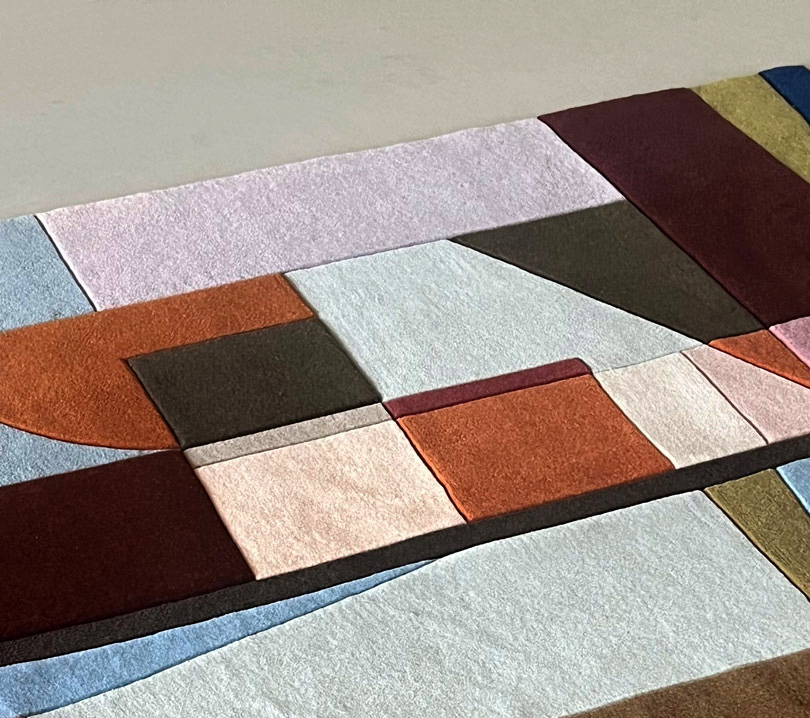
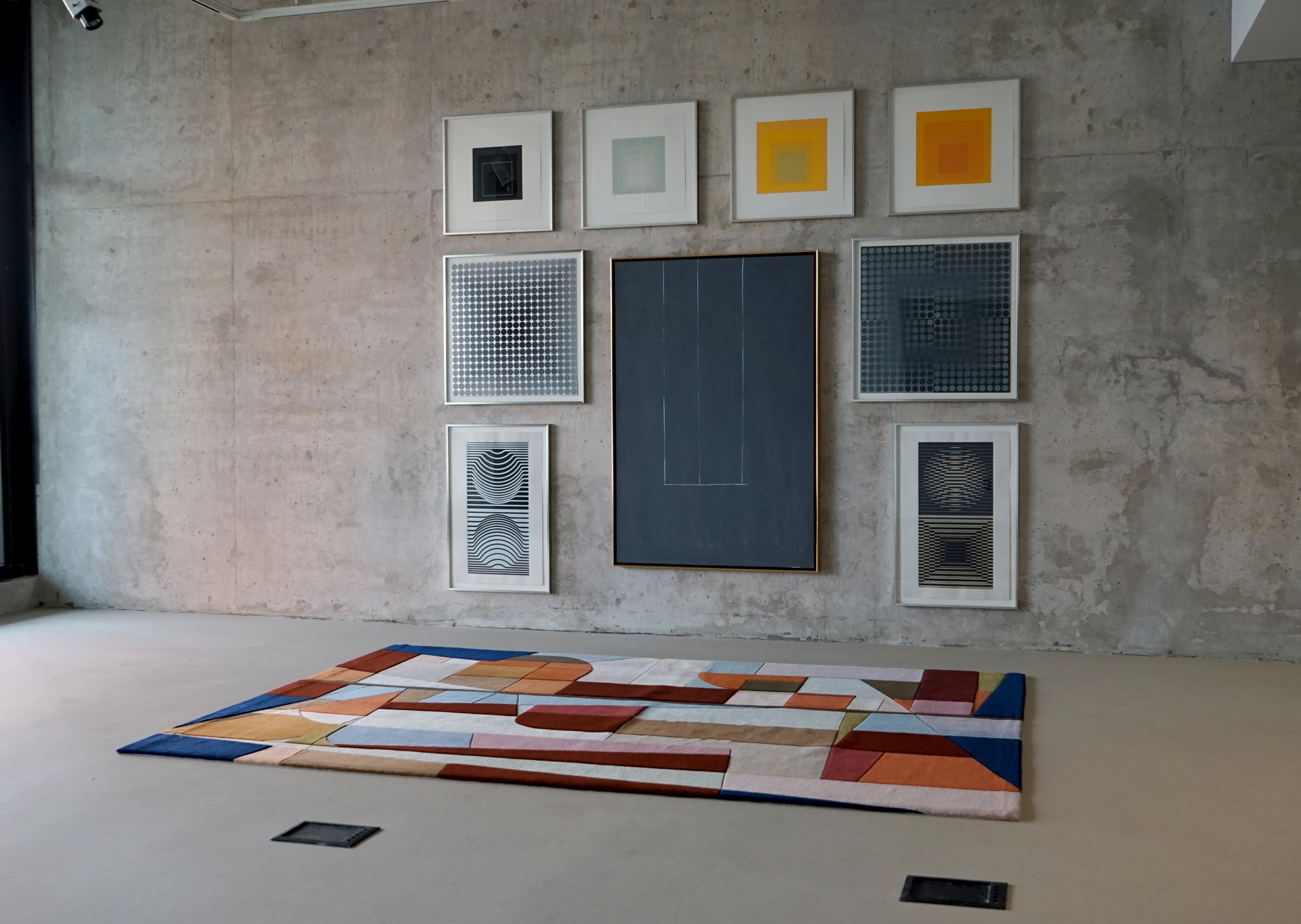
In this iteration of La Betty’s “collection,” we are presented with a selection of abstract works from the York University Art Collection. There are some Josef Albers’s colour studies from the early seventies, in his familiar nested square pattern, along the top. In the middle, Robert Motherwell’s 1970 painting Open. Flanking this on each side are four prints by Victor Vasarely, two from his 1966 CTA 102 suite and two from his 1967 Constellation series. Finally, loaned for this exhibition by Founded by Garcia, is Grands Ensembles #1.1, an exquisite hand-dyed, hand-tufted, and hand-carved rug by John Monteith created for Urban Fabric Rugs in 2020.
These are all works that are, on the surface, all about flatness. Of a particular high modernist bent, the pieces present initially as nothing more than surface. But then, as one contemplates them, this flatness falls away, gaining depth, as all such works do given time. They are all, on their own, works worth paying attention to, slowly, with or without the prompts of La Betty.
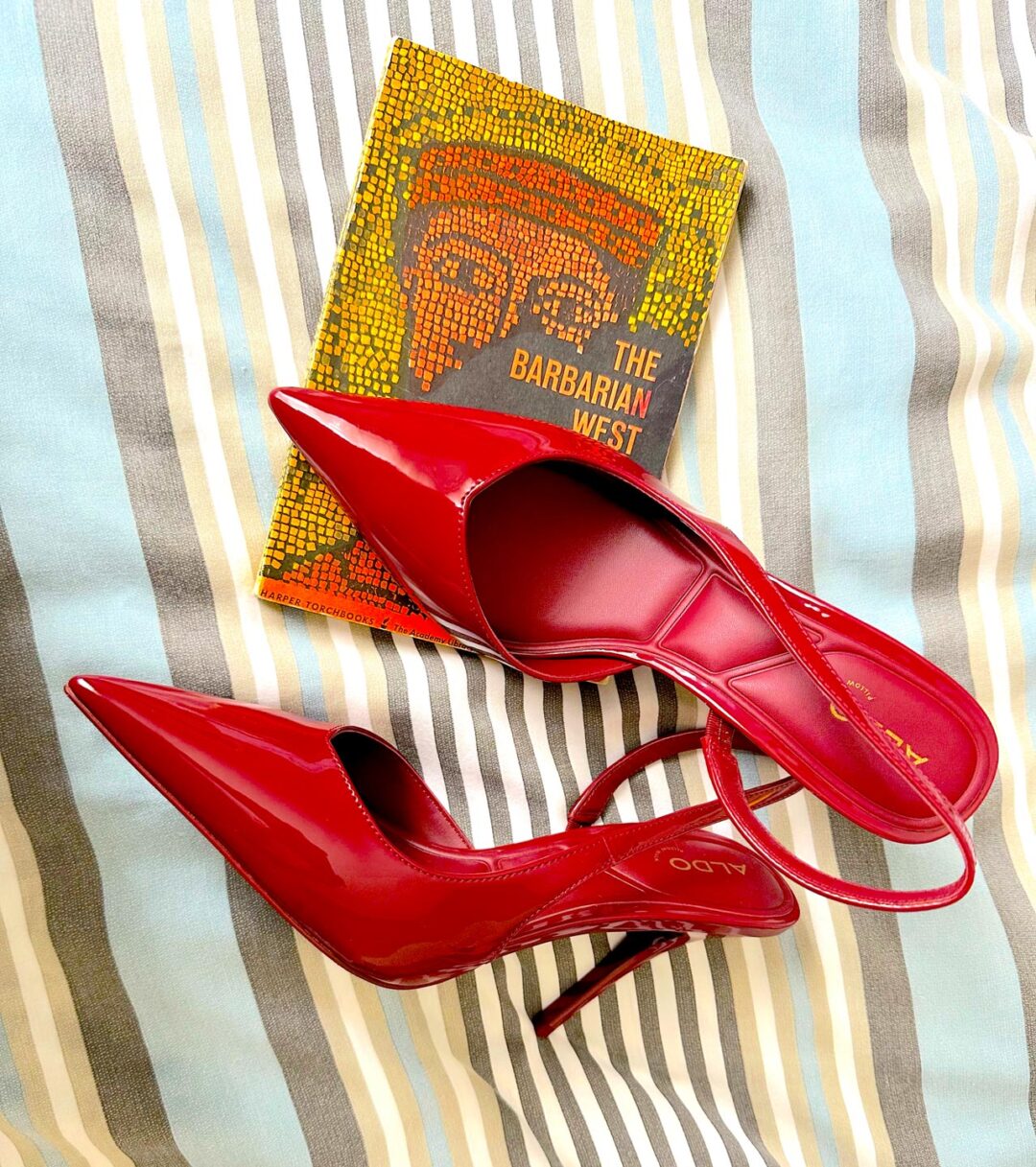
Here, however, La Betty is present. Or, at least, traces of her are present—a shawl and some abandoned red shoes. Perhaps the inclusion of Monteith’s rug is more than just synchronous, as the didactic in the gallery suggests. His work, falling certainly but uneasily into the tradition of abstraction, takes as a starting point representations of architectural spaces, but inflected by the work of scholar Andreas Huyssen who brought techniques of literary history to the reading of urban spaces. As an artist, Monteith is aligned with what has become termed Queer Abstraction, twisting, as it were, the high modernist ideals of works such as those on the wall, foils for La Betty’s retreat into pure surface. His work draws from the masculine twentieth-century histories of architecture and abstraction, executed with a colour palette and materials associated with queer, domestic, and feminine histories of craft and making. Monteith reminds us that abstraction, and surface, always has its own form of depth, and in this depth the stories that constrain the University’s collection begin to unravel.
Randolph has suggested that the setup of the works, and the traces of La Betty’s presence, is for us to recognize this particular installation as a time-travelling device; we’re not sure, however, where (or, more aptly, when) La Betty has de-materialized to. Whenever it is, we can imagine, if we want, that she may have finally listened to one of those errant sprites and escaped the plane of surface …
– Michael Maranda