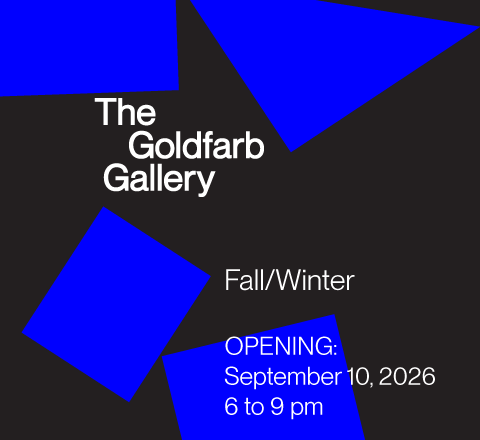
Opening:
Thursday, September 10, 2026
6 to 9 pm
(Lillian O'Brien Davis and Jeanne Randolph will be present for the opening but unfortunately Torkwase Dyson is unavailable. She will be joining us in late October and then again in March for the closing events.)
September 11, 2026 — March 6, 2027
Fabulous Neoconstantinopolitanism
Jean Randolph with John Monteith
Visible Vault Study Centre
“As a shopping adept, eschewing analysis or fact, La Betty restricted her acquisitive desire to objects favoured by celebrity endorsement and a breath-taking price. These criteria confirmed, La Betty knew what she liked. It is probably accurate to say consumerism replaced her insanity.”
– Jeanne Randolph, My Claustrophobic Happiness
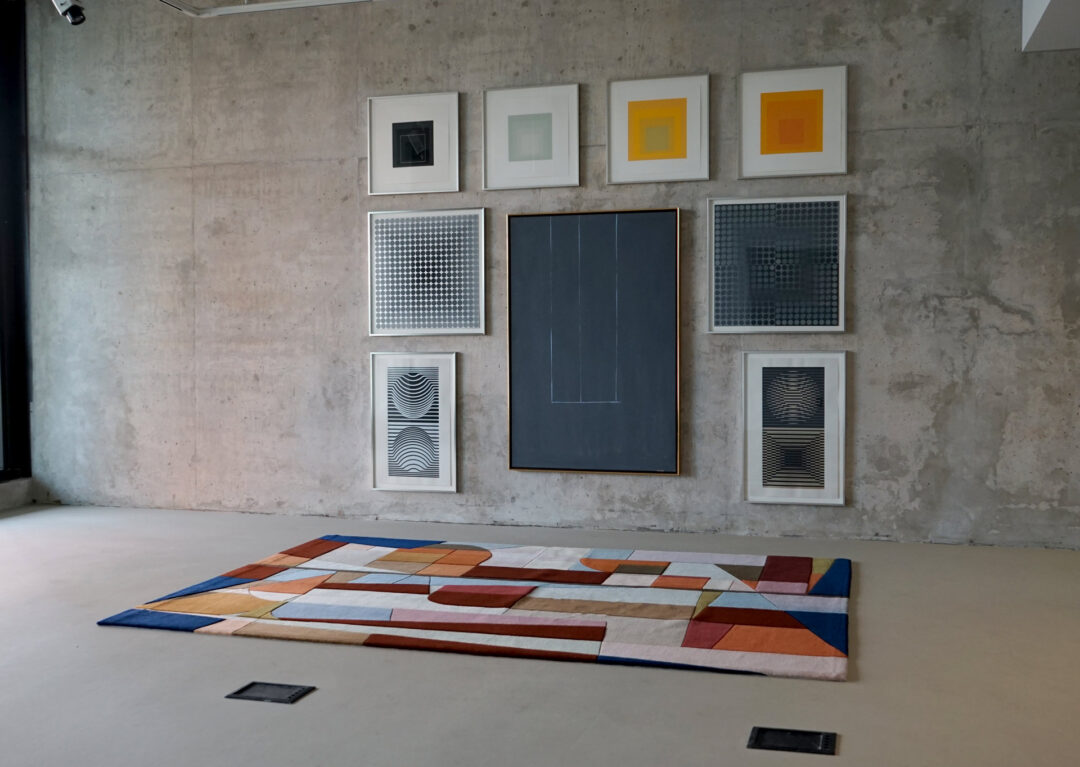
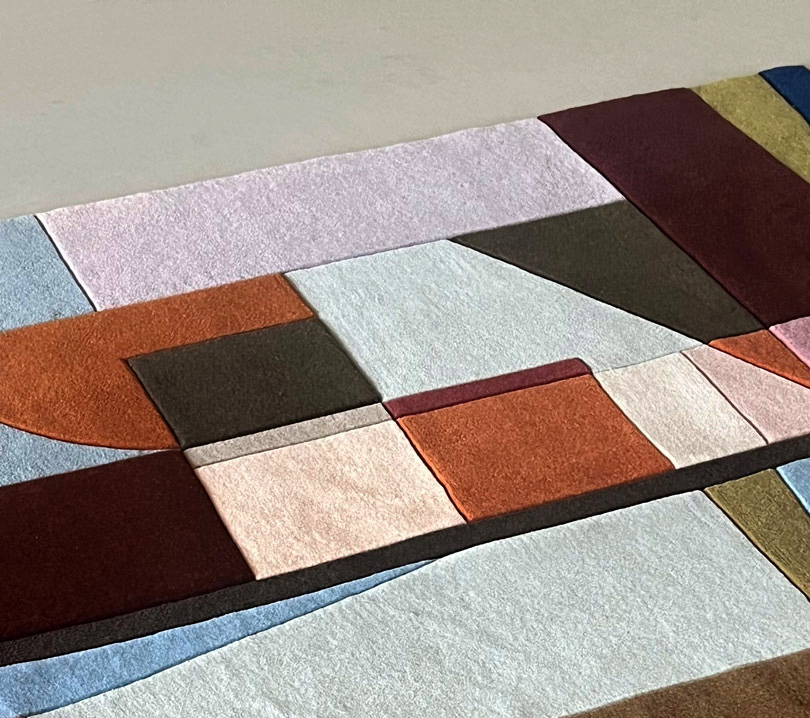
In the Visible Vault’s Study Centre is the latest iteration of Jeanne Randolph’s series of exhibitions and texts that explore the world of La Betty, a trust fund recluse who has retreated into the comfort of her Vancouver condo overlooking English Bay. Inspired by the tribulations of St. Anthony of the Desert, La Betty is the inheritor of twentieth-century consumer-grade materialism, buttressing herself from existential anxieties with advertising slogans and luxury goods. The exhibition itself is a mis-en-scène, constructed with a selection of abstract works from the collection of York University, their flatness intended to echo the flatness of La Betty’s engagement with the world. Works by Victor Vasarely, Josef Albers, and Robert Motherwell dominate the space, hung salon-style in a grid format. Laying in front, however, we find an abstract rug by contemporary artist John Monteith. Brought in to unsettle the works on the wall (and perhaps the assumptions of the collection), it provides a stage from which Randolph’s narrative unravels.
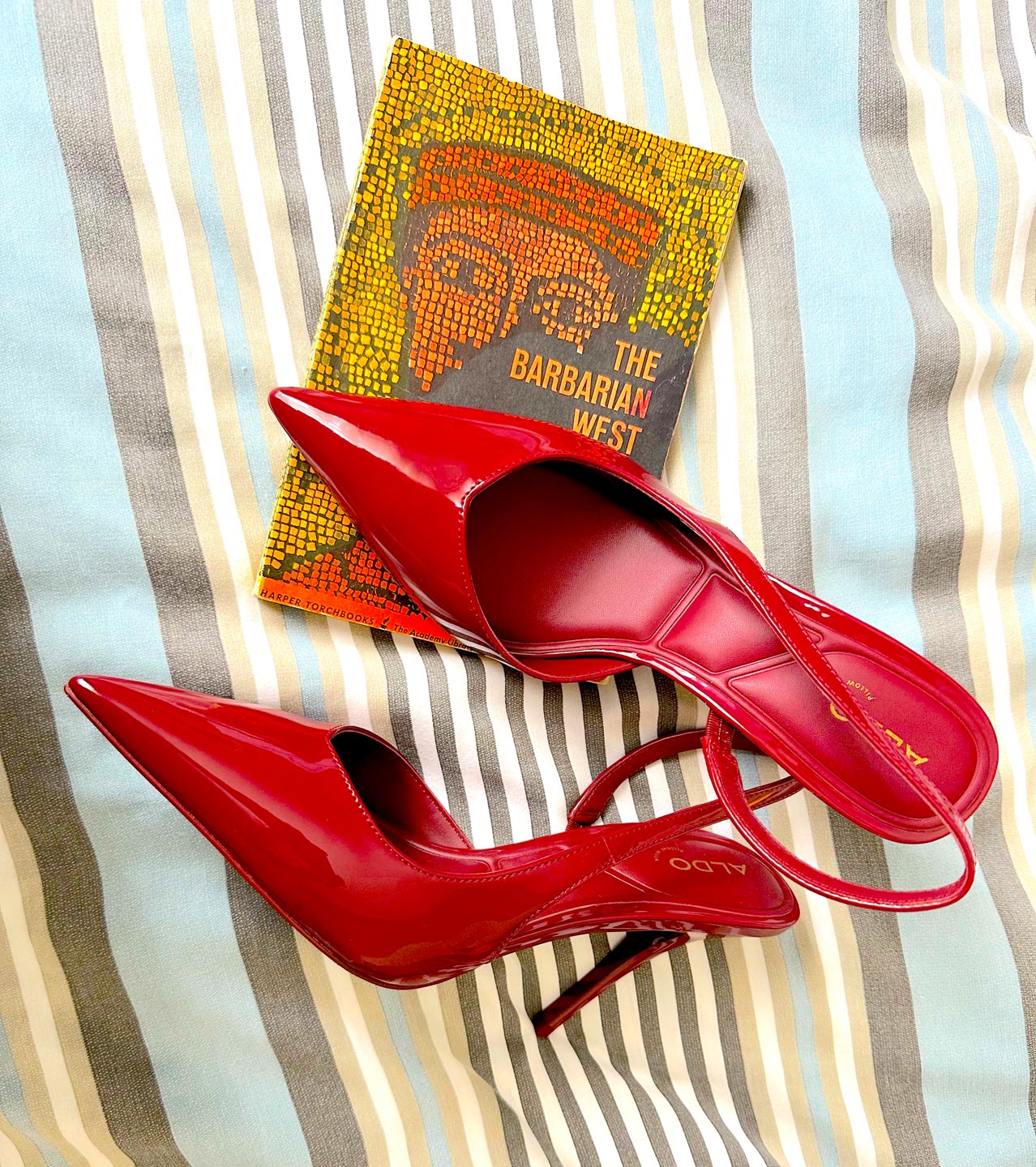
Courtesy: Jeanne Randolph.
Jeanne Randolph is an independent intellectual whose writings interpret Canadian culture psychoanalytically and philosophically, reflecting her disdain for advertising and consumerism, her paranoia about The Technological Ethos, and her cavalier attitude toward pop culture, fashion, ethics, and hysteria. Author of the influential books Psychoanalysis & Synchronized Swimming, 1991; Symbolization and Its Discontents, 1997; Why Stoics Box, 2003; and Ethics of Luxury, 2007, she has recently turned to the genre of artists’ books and other text/image works, surveying, amongst other things, the vanishing telephone booths of Manitoba. She invented the art-critical method “ficto-criticism.”
John Monteith did his undergraduate degree at OCAD University, received an MFA from Parsons in 2008, and began a Master of Research at the Royal College of Art this fall. Monteith consistently works across mediums, pushing and expanding rigid disciplinary boundaries whether through photography, painting, drawing, textile-making, or curation and collaborative initiatives. Informed by cities that bear a diverse history of the built form in their articulation of spatial dynamics and representational politics, Monteith’s practice draws on issues of identity, memory, and history. He has exhibited internationally, including at the Tate Modern, Taipei Contemporary Art Center, and the Schinkel Pavillon in Berlin. Reviews and essays on his work have appeared in Mousse, C Magazine, Art in America, and Berlin Art Link, amongst others.
Installation Team: Uroš Jelić (lead), Phu Bui, Corinne Carlson, Jonah Kamphorst, Jordan May, Grayson Richards, Joe Thomson, Manny Trinh, Morgan Zigler
This exhibition was originally conceived by Jenifer Papararo and realized through the combined efforts of Allyson Adley, education and community engagement coordinator, and Michael Maranda, assistant curator, publications. It could not happen without the work of Clara Halpern, assistant curator, exhibitions, the installation team, the rest of The Goldfarb Gallery staff, and the generosity of both Jeanne Randolph and John Monteith.
Please note: this exhibition is visible from the hall outside the Study Centre. It is fully open to the public on Wednesday and Saturdays, and appointments can be made to see it at alternate times.
See also: