March 6 – July 25, 2026
Anne Duk Hee Jordan: Worlds Away
Square gallery
Shifting focus away from humans, Berlin-based artist Anne Duk Hee Jordan brings to light unseen connections between different species and to forces of the world that usually remain imperceptible. With previous careers including freediving and occupational therapy, Jordan’s multidisciplinary practice includes drawing, hand-built robots, edible landscapes, sculpture, public art, film, and sound. Centering ecological systems, Jordan’s artistic research delves into the present conditions of life on earth. Her work takes up transience and transformation and the interchange between natural phenomena, systems of knowledge, and philosophy.
This exhibition explores watery realms, from a small river to the depths of the sea, through installation, sound, and sculptures from Jordan’s body of work Worlds Away, 2021–23, as well as the recent film Groundwater, 2025.
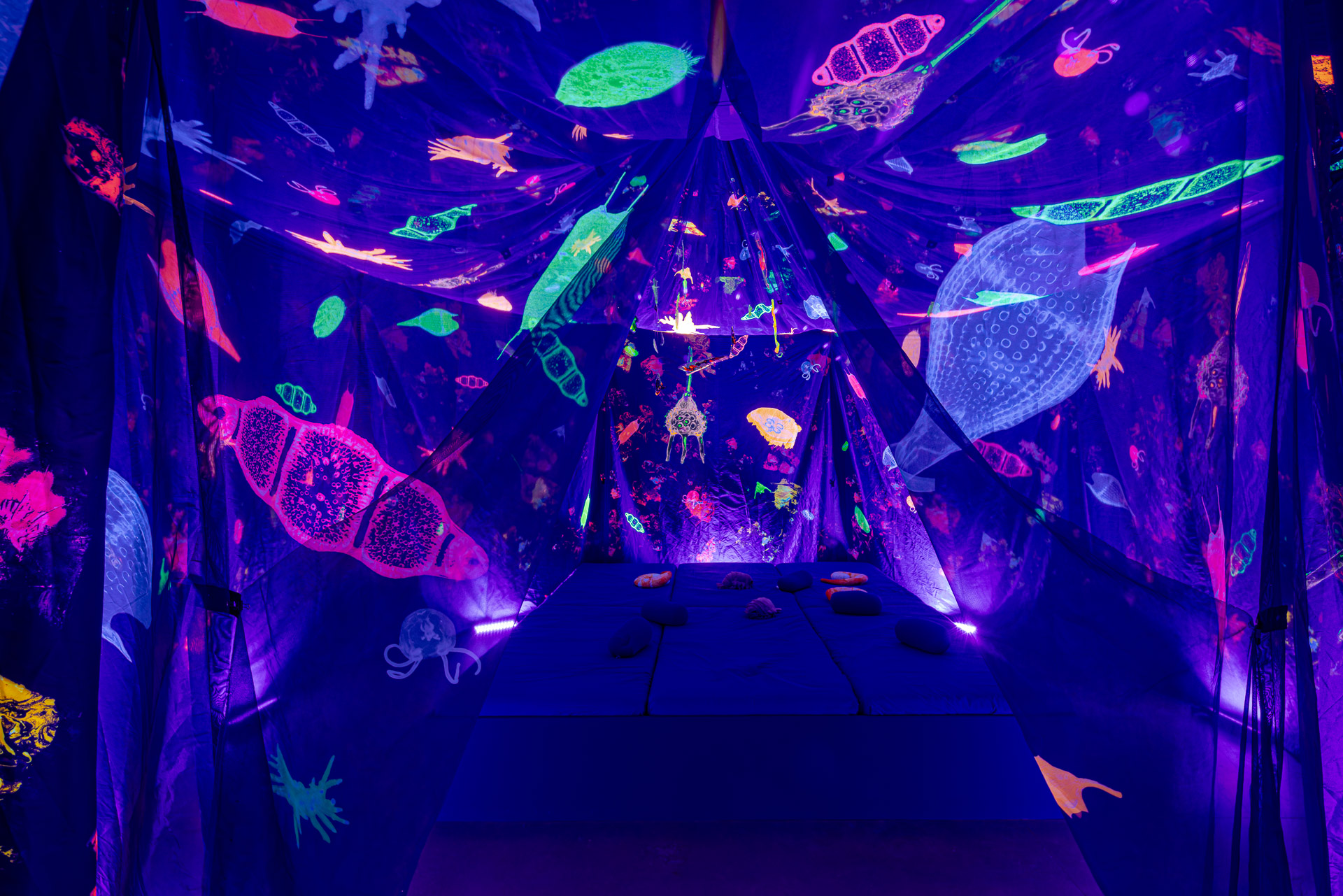
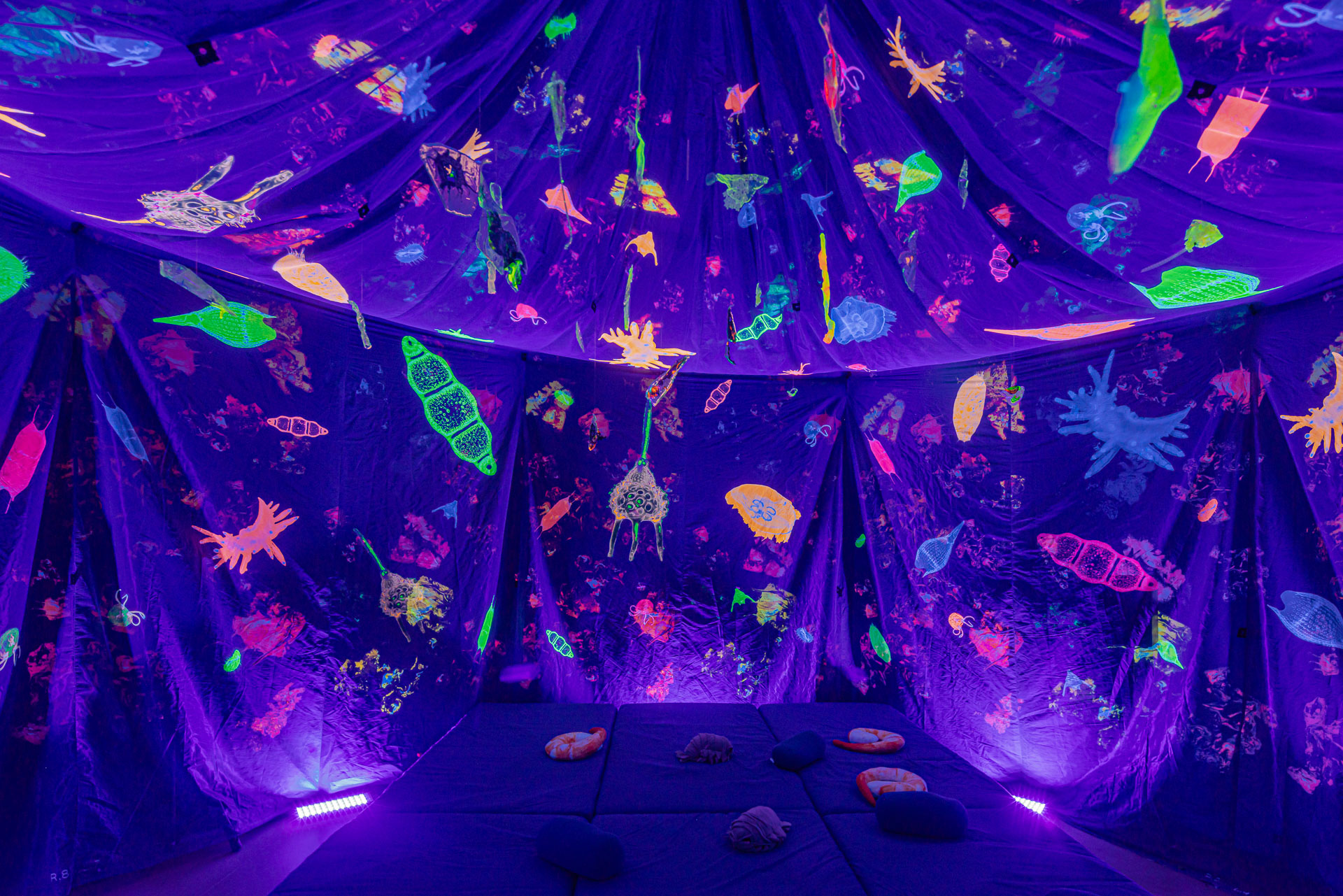
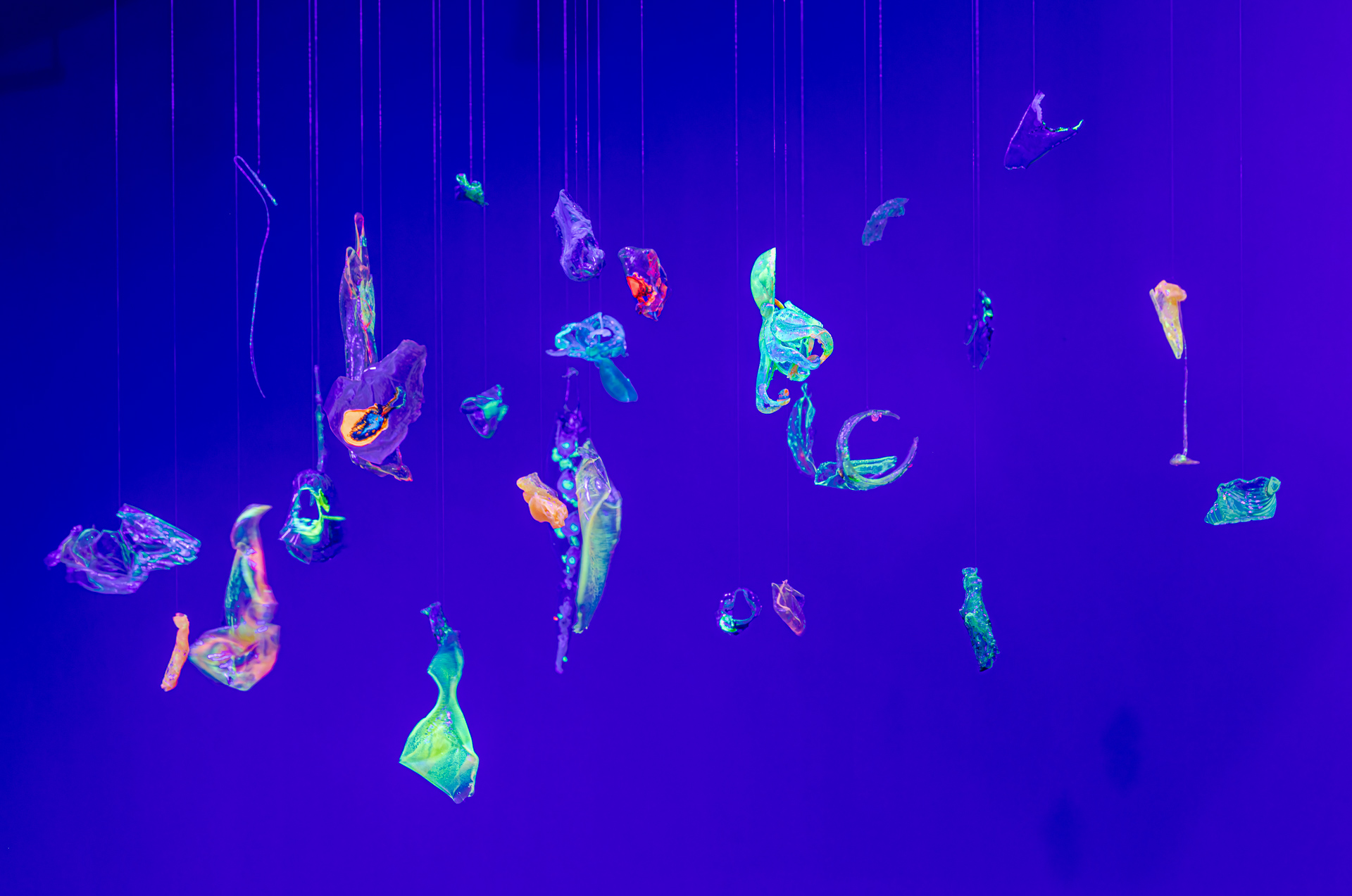
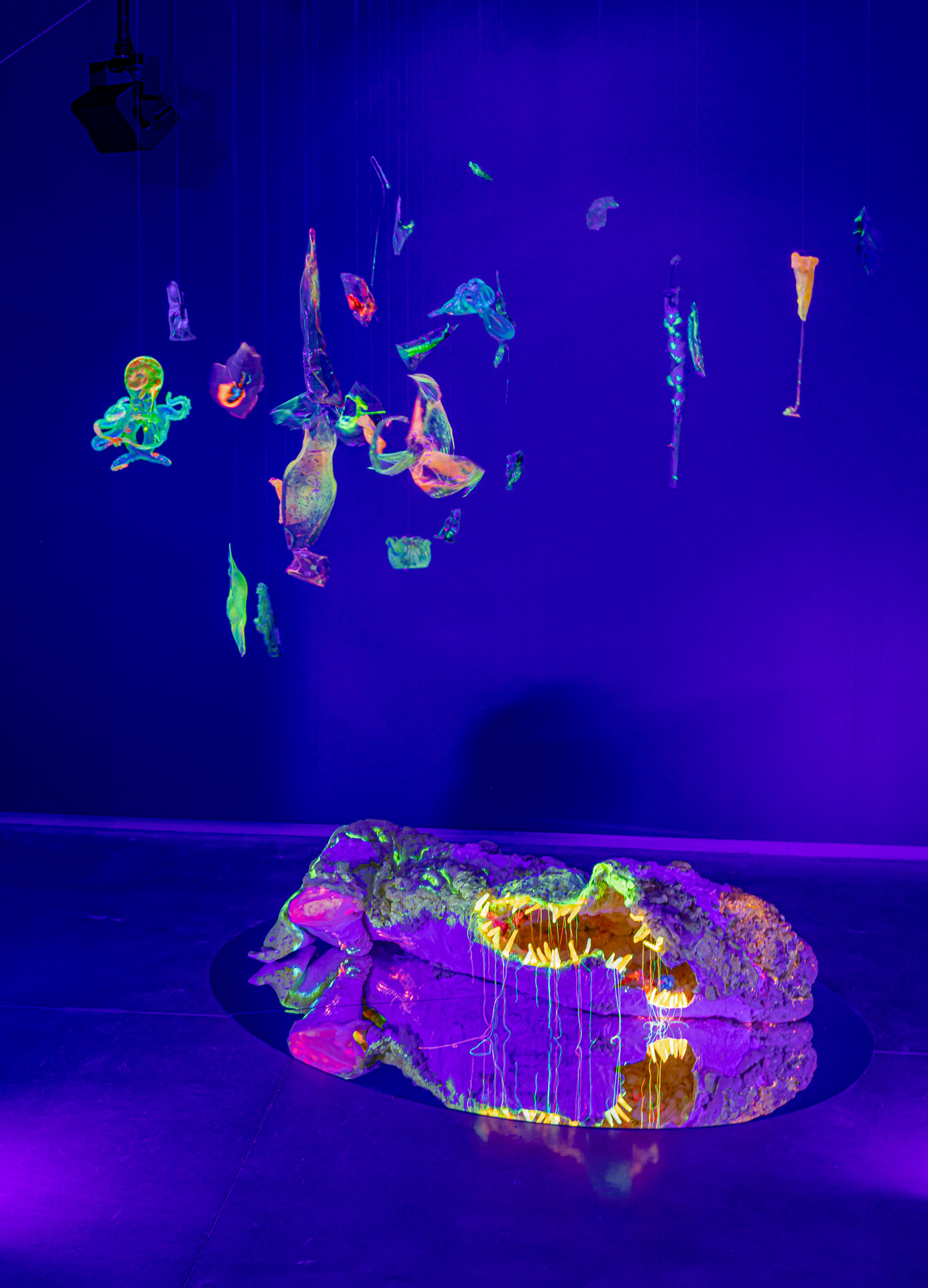
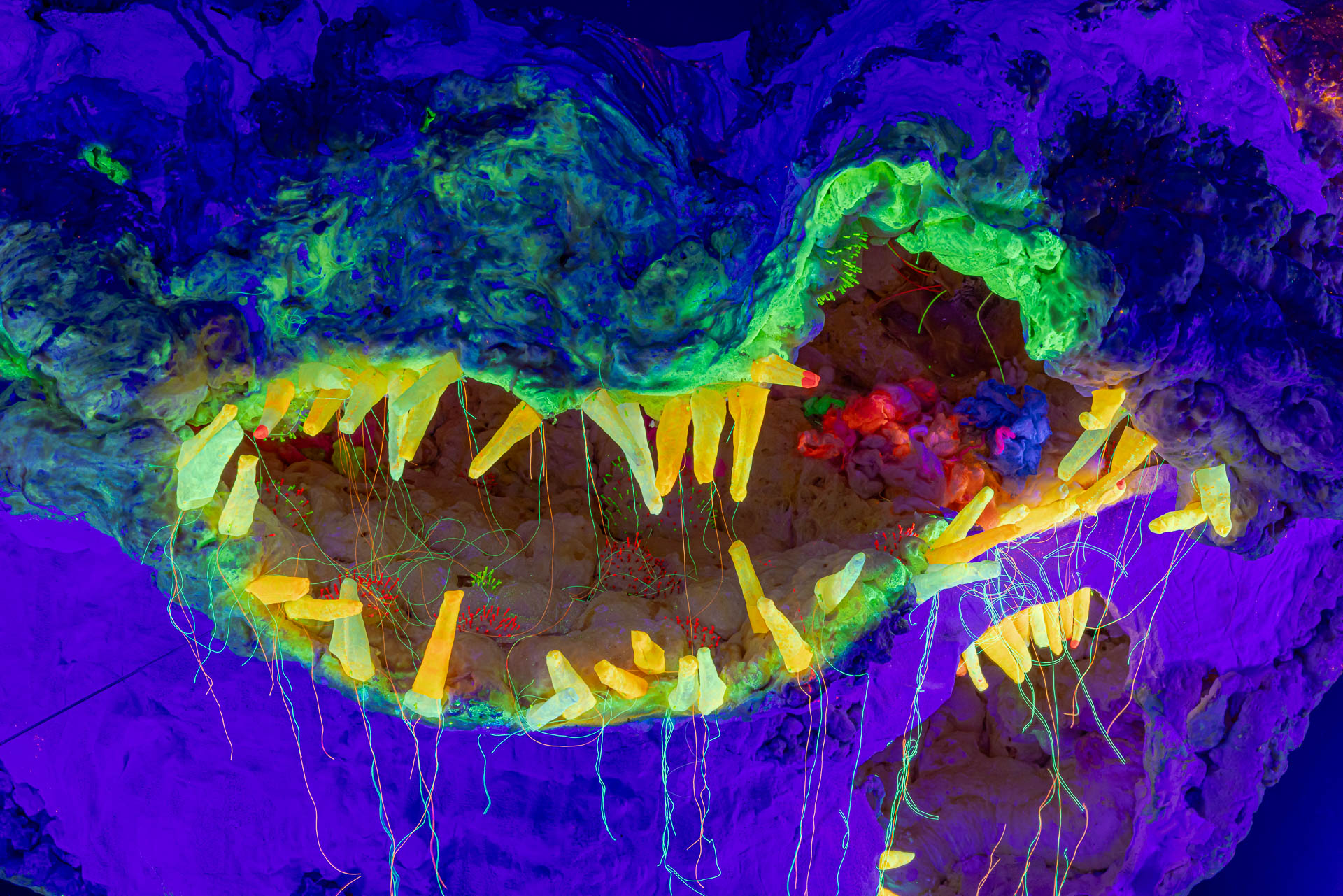
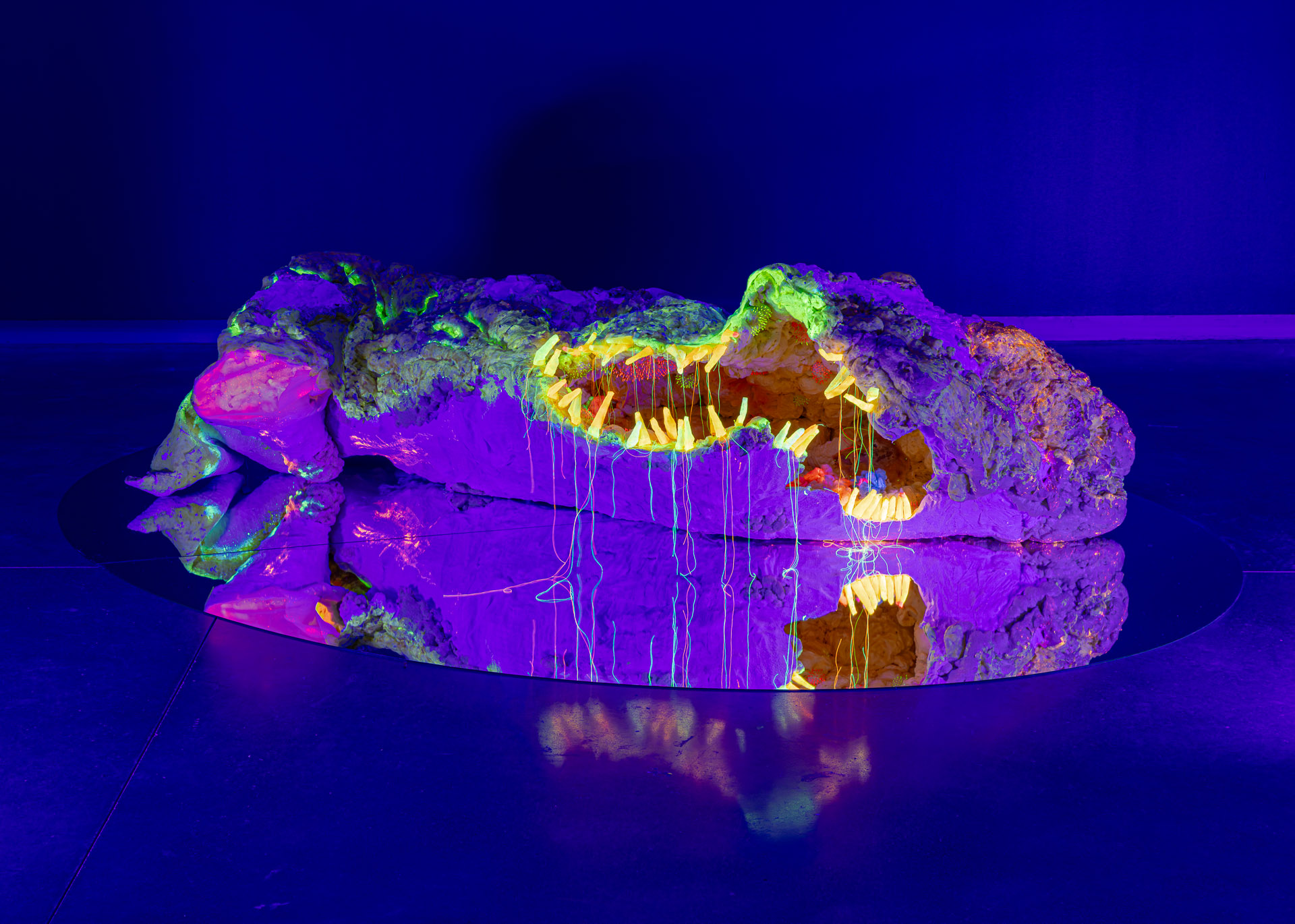
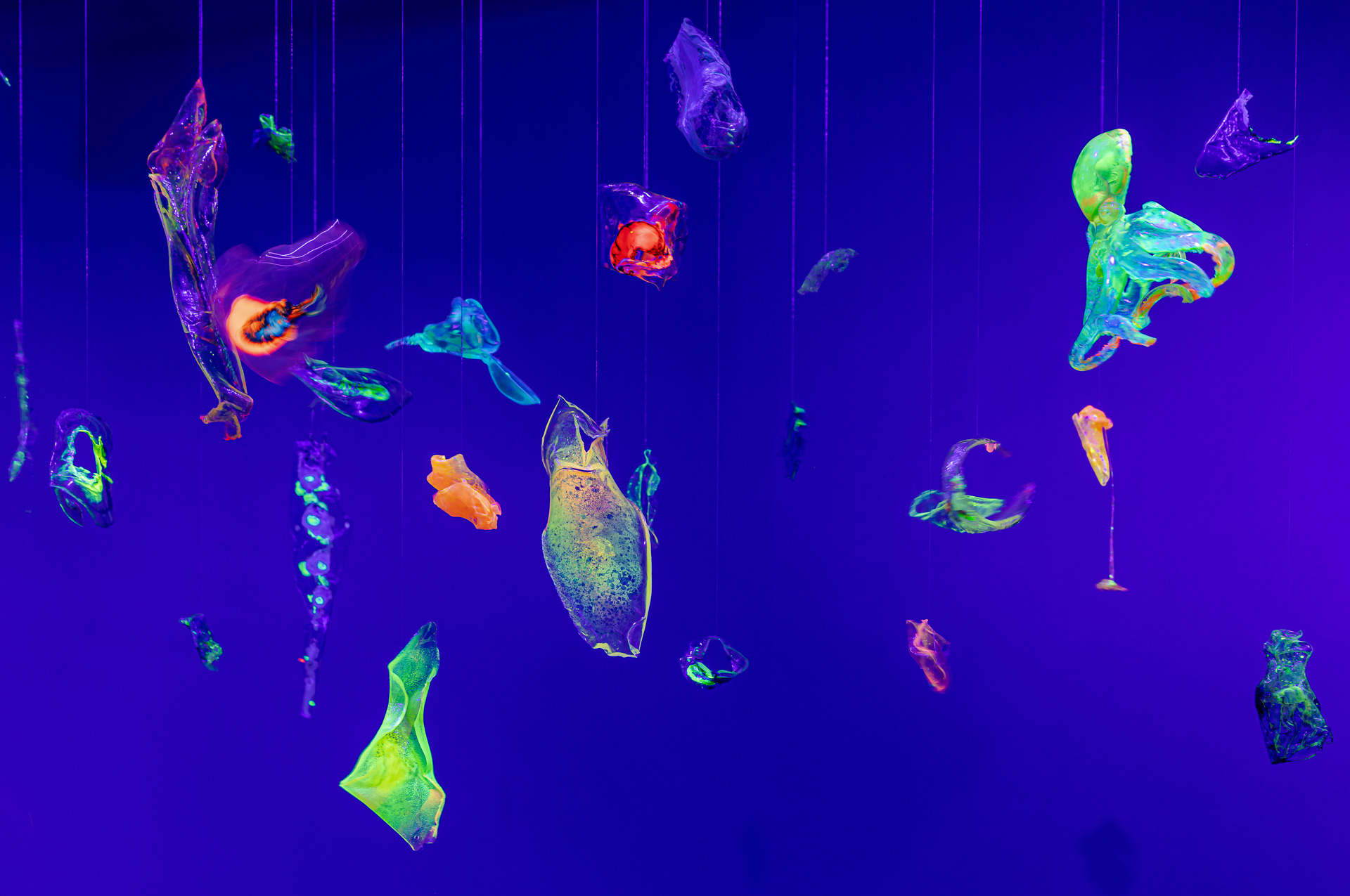
An influential thinker for Jordan is the evolutionary biologist Lynn Margulis. Particularly apt is this passage: “We animals, all thirty million species of us, emanate from the microcosm. The microbial world, the source and well-spring of soil and air, informs our own survival. A major theme of the microbial drama is the emergence of individuality from the community interactions of once-independent actors.” [1] Worlds Away unfolds as a multisensory environment centered on such ocean organisms as phytoplankton and other deep-sea life. Located in this deep-blue space, the mouth of the floor-based sculpture Clam Extravaganza, 2021, has a bioluminescent glow, sharing space with the delicate cast-resin phytoplankton, a primary source of sustenance for this filter feeder.
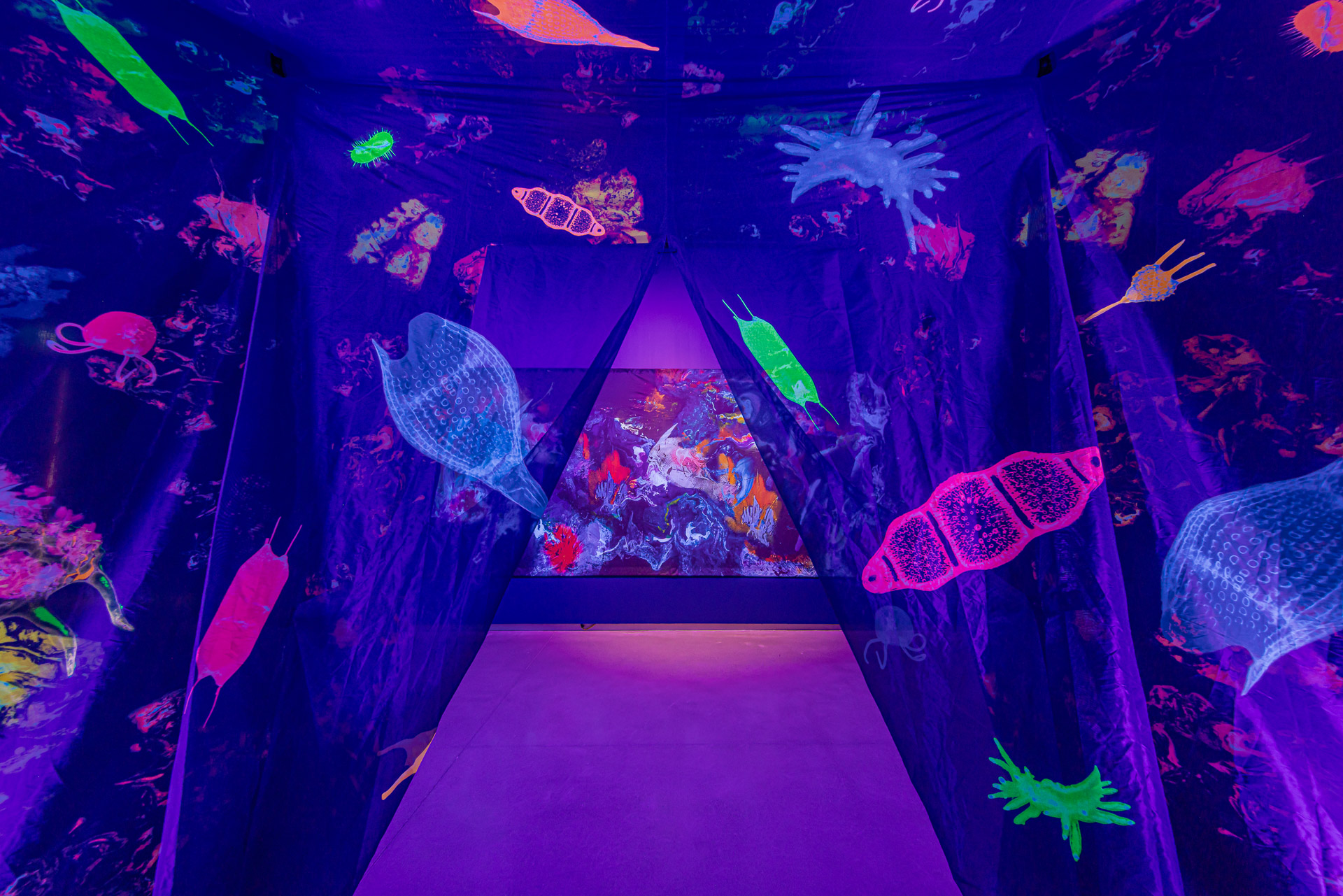
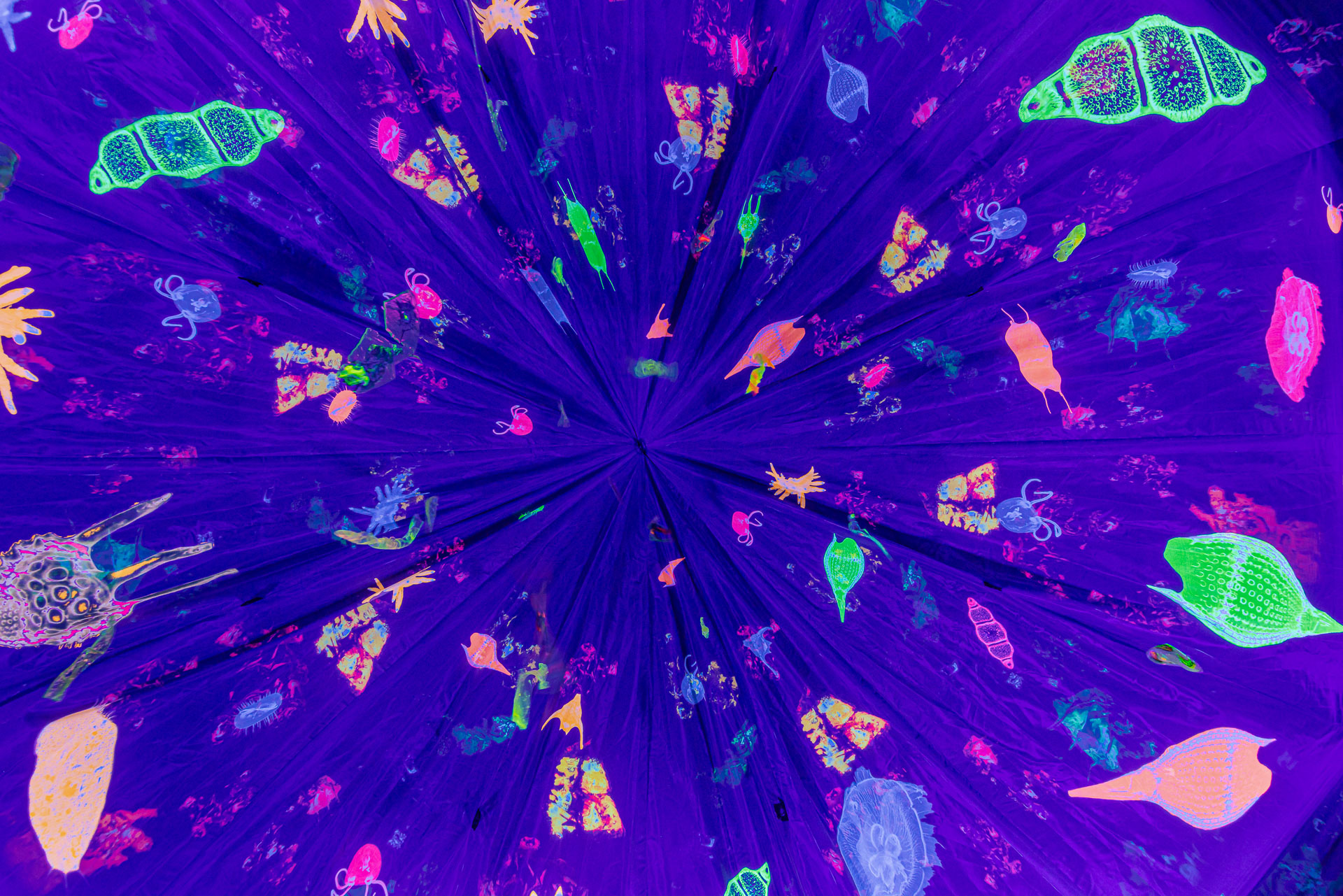
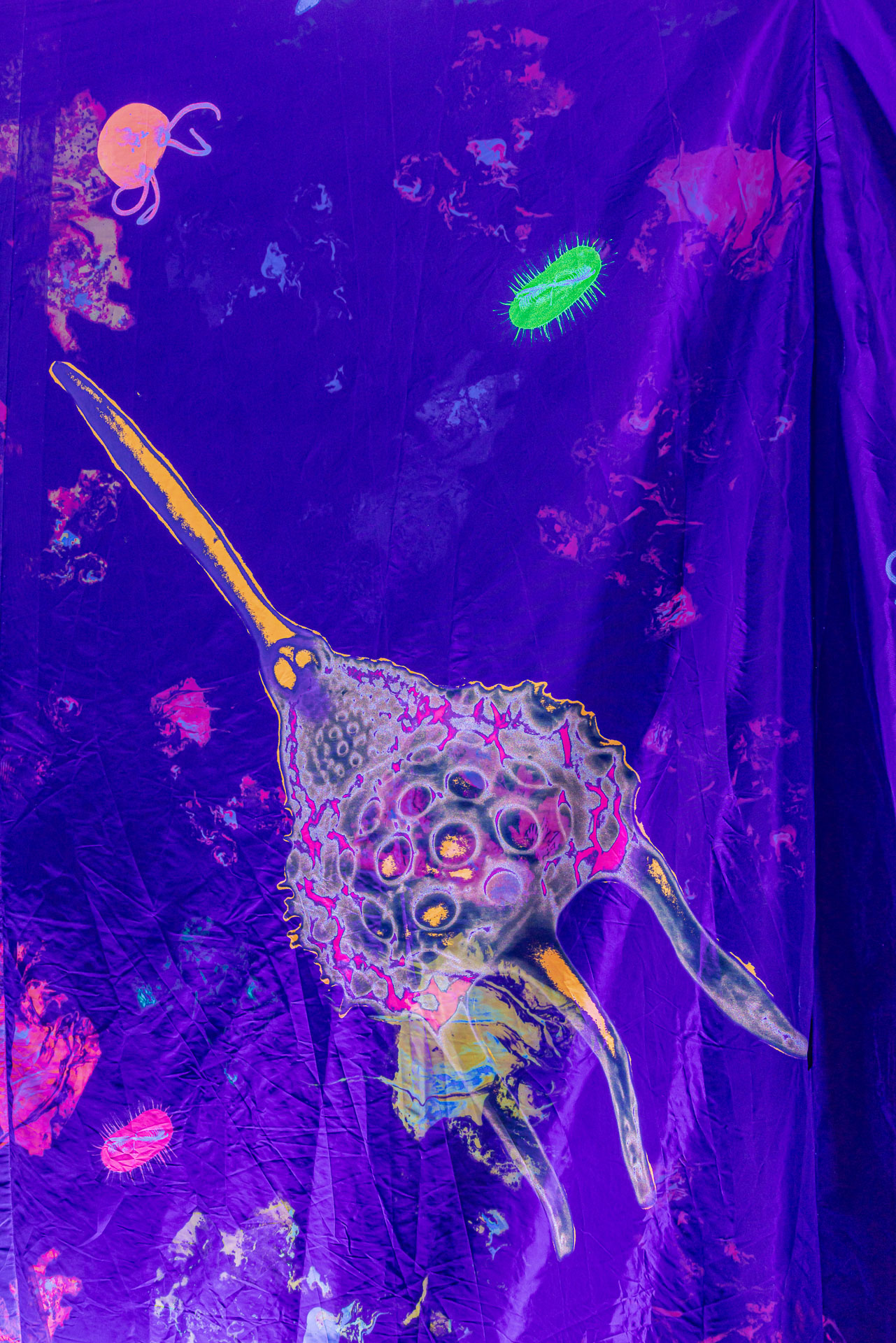
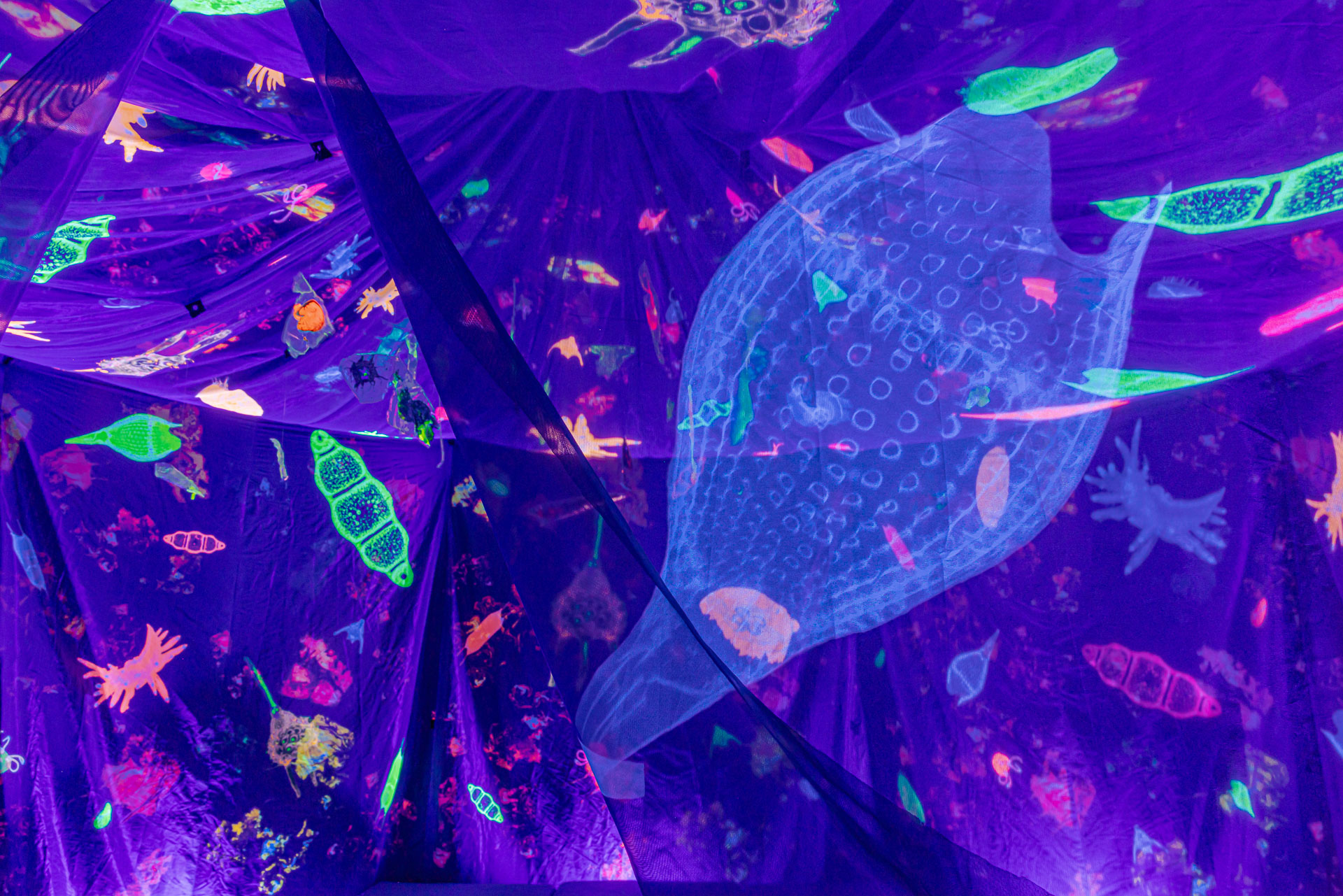
Visitors are invited to enter the installation Worlds Away, 2022, whose fabric walls are printed with glowing fluorescent phytoplankton, microscopic drifting aquatic organisms placed at centre stage. Forming the base of the ocean food chain, plankton ultimately feed all oceanic animals and, ultimately, all animals that depend on fish as a food source. These tiny beings can also take credit for half of the world’s oxygen supply and half of the planet’s carbon sink. [2]
Immersed in the space, visitors will encounter a carefully structured sound composition that moves through different states of descent, breath, and vibration. Distant human activity above water slowly gives way to submersion: breathing becomes meditative, rhythmic, and heavy, while beneath the surface curious animal presences emerge. At moments, the sound condenses into a brief choral formation of whales before dissolving again into the depth. This cycle of sinking and breathing returns in altered form interwoven with more technical, mechanical sounds and deep-sea atmospheres, each cycle longer and more laborious than the last. This progression is interrupted by a sudden rupture: a lightning strike recorded underwater. Following this rhythmic shock, the sound shifts its focus toward human interventions in the oceanic environment.
The previously restrained tempo gives way to accelerated pulsations, culminating in a melancholic passage featuring killer whale songs accompanied by distant motors. Throughout the work, breathing becomes increasingly spatialized and laboured, emphasizing depth and pressure. From the low register shaped by underwater impacts and engines, the killer whales rise once more, guiding the listener upward. The final section settles into a quiet phase, gently preparing the ground for a renewed beginning.
In this installation, Jordan perceptively translates her aqueous research into a richly textured somatic experience through a dynamic sonic and haptic arrangement. This link between the body’s rhythms and underwater sound connects to cultural theorist Astrida Neimanis’ research on bodies, water, and weather and their potential to help reimagine care, responsibilities, and relationships amid the threat of climate change. Neimanis, Canada Research Chair in Feminist Environmental Humanities at the University of British Columbia grounds her work in the position that “we are all bodies of water”; if human bodies are mostly water, we are made of the same material as our environment. In Worlds Away, Jordan evokes environments and organisms that are physically distant and typically difficult to perceive, sharing affinities with Neimanis’ prescient questions: “What kind of ethics would we cultivate if we paid attention to our watery origins? How could we reimagine kinship and connection if we recalled this inescapable network of animals, plants, rivers, clouds, and oceans, but also sewage plants, tailings ponds and dirty dishwater, that circulate through us?” [3]
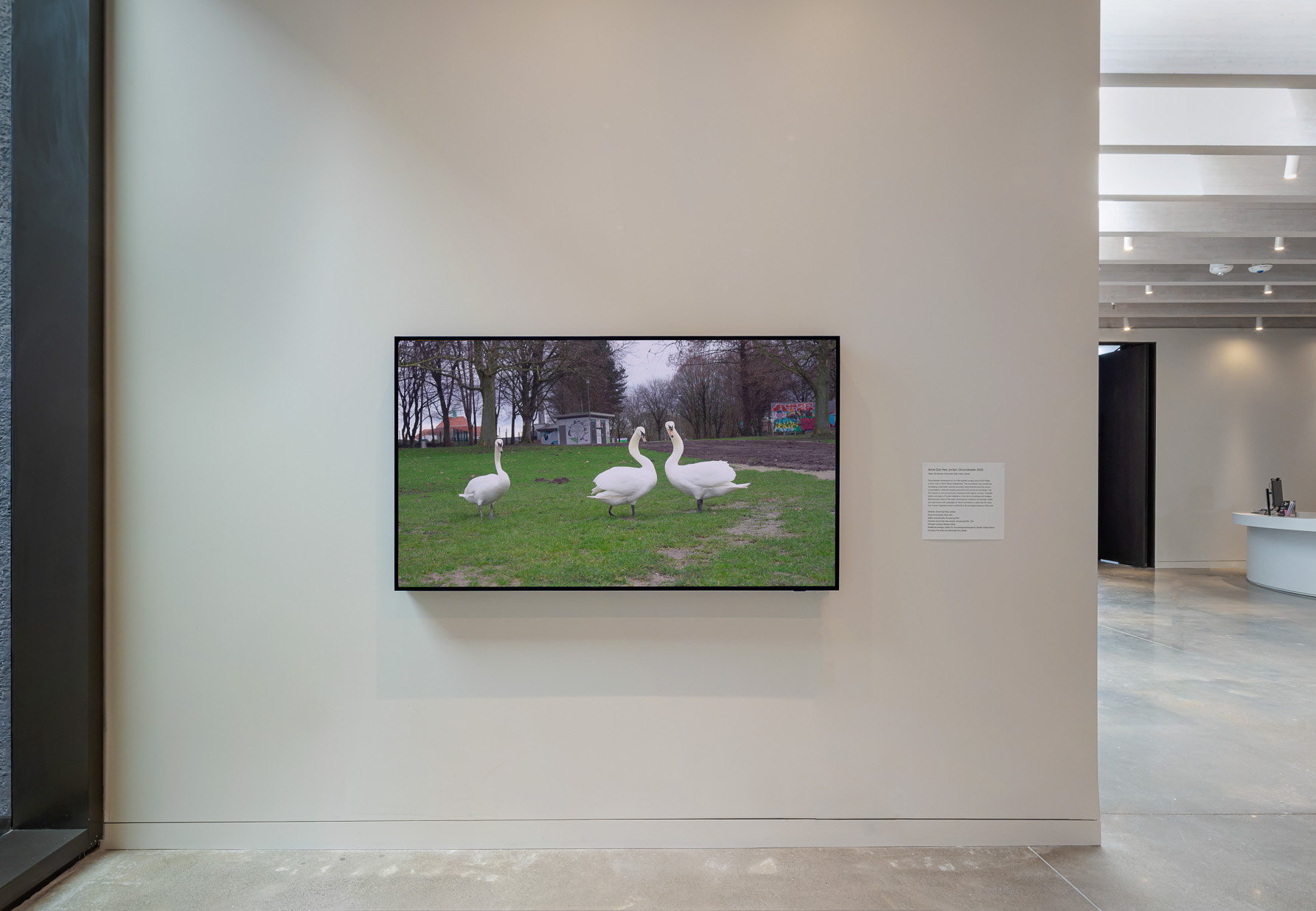
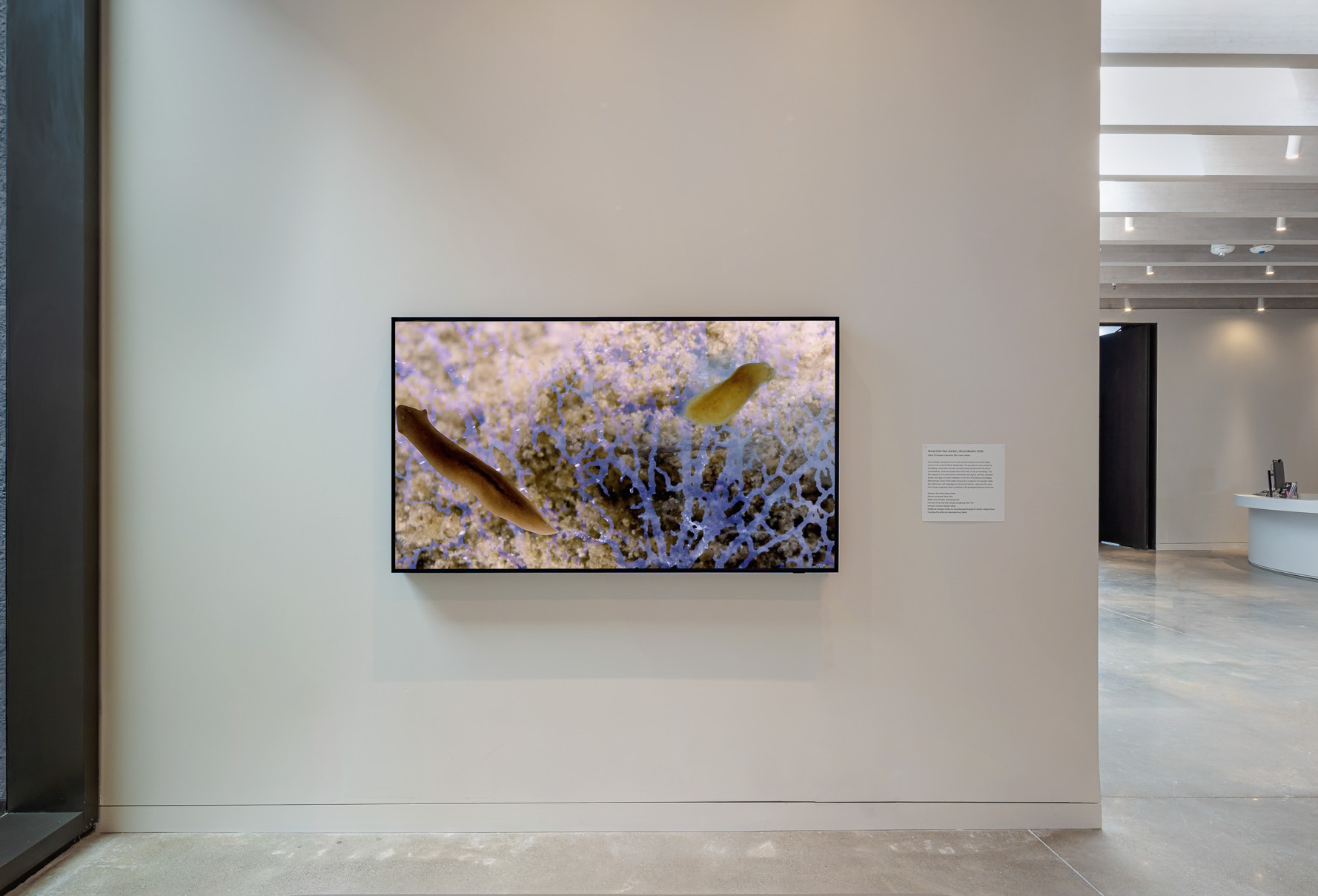
Alongside Worlds Away, this exhibition includes the film Groundwater. This 16-minute looped video developed out of a site-specific project around the Pader, an extremely short river in North Rhine-Westphalia. The soundtrack was created by translating underwater sounds recorded using hydrophones into sound compositions while the visuals record the river and its surroundings. The film depicts a rich environment interlaced with plants, animals, forested banks, and signs of human habitation in the form of buildings and bridges. Macroscopic shots of the water showing tiny creatures not typically visible are interwoven with passages of vibrant animations, capturing the many non-human organisms which contribute to the ecological balance of the river.
“To understand life, we must understand the partnerships that make it possible,” writes Margulis in Microcosmos, 1986. Throughout this exhibition, questions of interdependence, ecology, climate, and the role of humans in the present state of the world and its possible futures abound. When asked whether rendering these forces visible, forces that typically remain indiscernible, will help people understand their impact on the environment, Jordan has said “I don’t know if I can show people that…. We live on a very old, grumpy, fragile planet and we are only a small part of its history. We created the problem, but we can fix it if we are more conscious of what we do and how we do it.”
Notes:
1. ↺ Lynn Margulis, Symbiotic Planet (Basic Books, 1999), 14–15.
2. ↺ Nicola Jones, “Researchers Parse the Future of Plankton in an Ever-Warmer World”, Yale University, 60.
3. ↺ Astrida Neimanis, in “Learning with Water,” La Escuela_ Journal 1 (2024): 35.
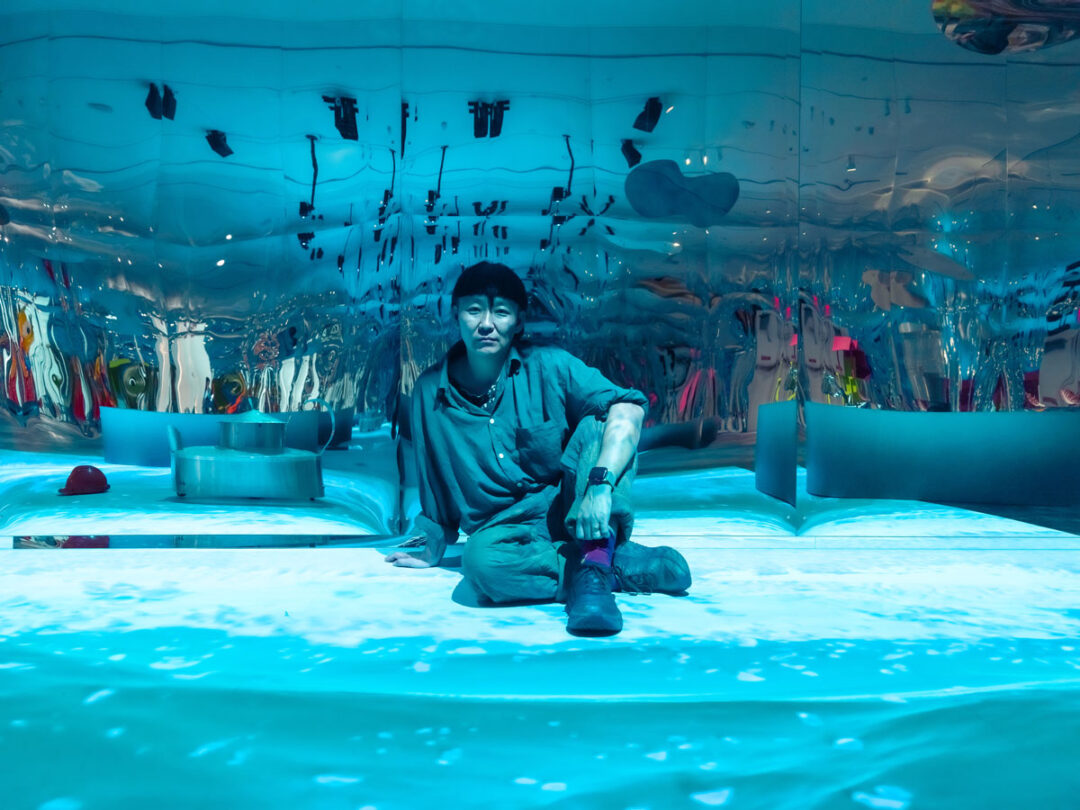
Anne Duk Hee Jordan (Korea, 1978) lives and works in Berlin. Jordan studied at the Kunsthochschule Berlin-Weissensee and completed an MFA with Ólafur Elíasson at the Institute for Spatial Experiments in Berlin. She is currently Professor of Environmental Intervention at HFBK Hamburg and recently returned from being an Artist-at-Sea with Schmidt Ocean Institute. Recent projects include a major site-specific public art commission with UP Projects in the UK, 2025–26. Jordan has had recent solo exhibitions at ZKM Karlsruhe, Germany, 2024; KunstHausWien, Vienna, Austria, 2024; Canal Projects, New York, 2024; The Bass, Miami Beach, Florida, 2023–24; HEK, Basel, 2023; Baltic Art Centre and Public Art Agency Sweden, Gotland, Sweden, 2022; KIOSK, Ghent, Belgium, 2021; and Kunstverein Arnsberg, Germany, 2019. Jordan has also participated in group exhibitions internationally at organizations including: Museo Nacional Thyssen-Bornemisza, Madrid, 2023; Barbican Art Gallery, London, 2023; 14th Gwangju Biennale, 2023; The Polygon Gallery, North Vancouver, 2022; MOMENTA Biennale de L’image, Museum of Fine Arts Montréal, 2021; and Gropius Bau, Berlin, 2020.
Artwork credits
Anne Duk Hee Jordan, Worlds Away, 2021–23
Design: studio air jordan (Andrea Macias-Yañez)
Composition/sound: Filip Caranica
Anne Duk Hee Jordan, Groundwater, 2025
Director: Anne Duk Hee Jordan
Sound composer: Nevo Ron
Editor and animator: Eunseong Park
Camera: Anne Duk Hee Jordan, Eunseong Park, Tim Verhaert, Andrea Macias-Yañez
Additional footage: Institut für Grundwasserökologie IG. GmbH, Adobe Stock
Installation team: Uroš Jelić (lead), Phu Bui, Corinne Carlson, Jonah Kamphorst, Jordan May, Manny Trinh
Anne Duk Hee Jordan: Worlds Away is curated by Clara Halpern, assistant curator, exhibitions. Artworks in the exhibition are courtesy the artist and alexander levy, Berlin.
See also: