March 6 – July 25, 2026
D’Andrea Bowie: Winter Wheat
Triangle gallery
D’Andrea Bowie’s Winter Wheat is the first in a new series of exhibitions that will feature alumni of York University. Every two years, a curator from the Gallery will work with a recent grad in presenting an exhibition of their work, marking a crossing of geographic proximity of gallery and university as much as graduate and curator.
Bowie was born into a religious Mormon family with roots in southern Alberta, moving with great frequency between Ontario and Alberta from birth until her middle school years. Shortly after turning sixteen, she left her family for her own migratory experience between Toronto and Europe while pursuing numerous career paths. She came to postsecondary education much later than most, beginning her BFA at OCAD university in her mid-thirties, concurrent with the raising of four children. She received her MFA from York University in 2023. This constant moving for the first three decades of her life has brought her to an appreciation of place-as-constant, and she has made a conscious decision to remain rooted in one place for an extended period.
That one place is an acreage on the Oak Ridges Moraine some 40 kilometres east of York University, in a converted nineteeth-century schoolhouse. Her studio is in a conjoined building which was once a leather workshop. Out the back door is a cornfield; across the road a quarry. Just to the south, new suburban subdivisions are being built. On clear days, you can see the CN tower in the distance. On very rare occasions, swans can be seen flying in a neighbouring field.
Normally, such quotidian details are irrelevant to an artist’s practice, but in the case of D’Andrea Bowie, these details are vital. The geographic proximity of her household (and studio) is a key aspect to her current work. Place-based research is central to her studio practice and she embodies it in material form in this exhibition. Working with materials that often evoke extractivist approaches to landscapes, she counters with a considered approach that sidesteps these tendencies. Instead, we are presented with a series of works that are imbricated with place and with specificity.
Winter wheat is a crop sown in the fall, allowing the seed to germinate and take hold in the cool fall months before entering dormancy over the winter months. Then, in late spring, the wheat can be harvested, a strategy for increasing the productivity of dryland farming. Spring wheat is then planted and harvested in the fall— the stubble necessary to protect the vulnerable winter wheat being left in the field. There is process, here, suggestive of a cyclical processing of raw materials, the leftover chaff from spring wheat setting up the conditions for winter wheat to flourish.
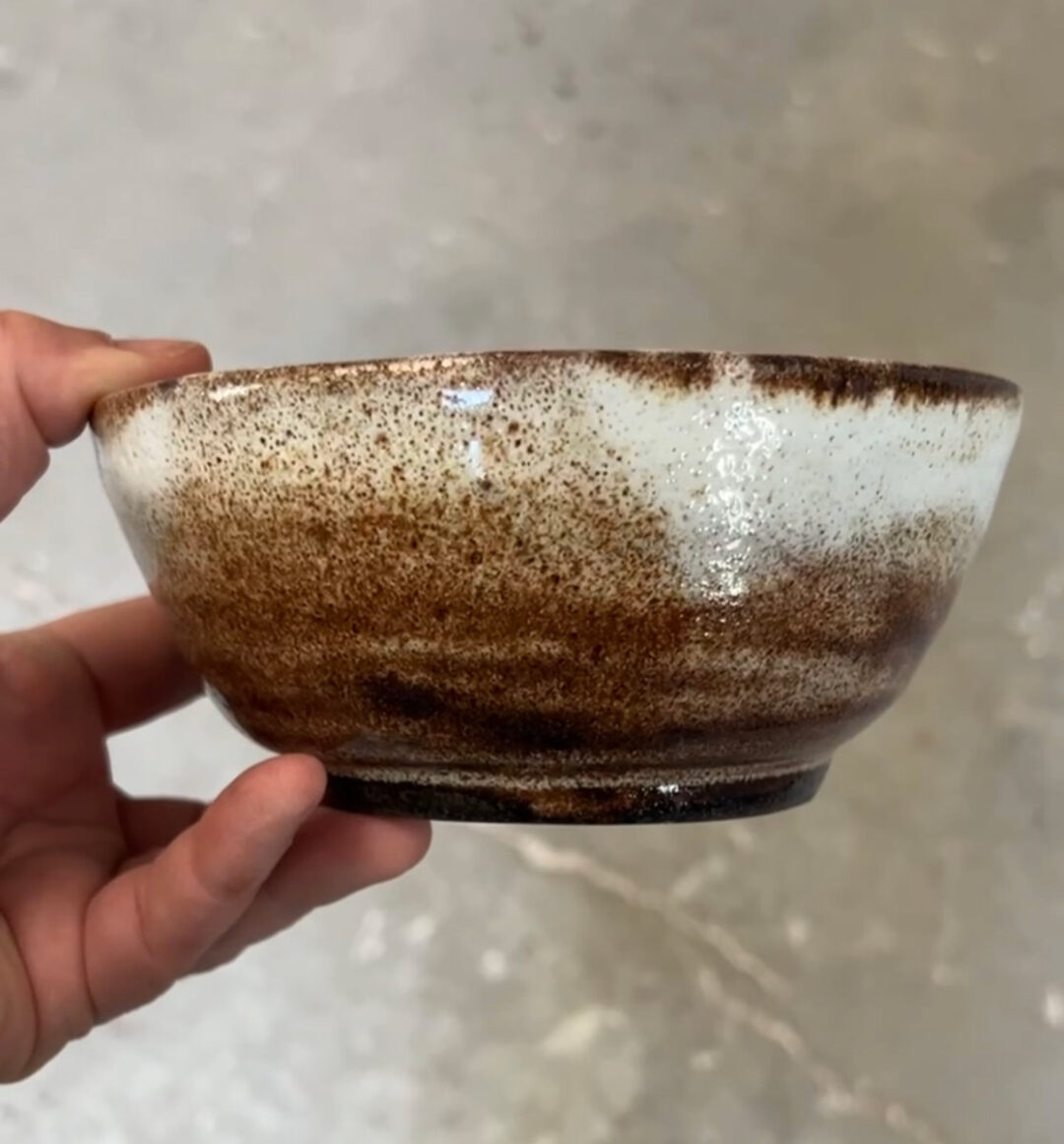
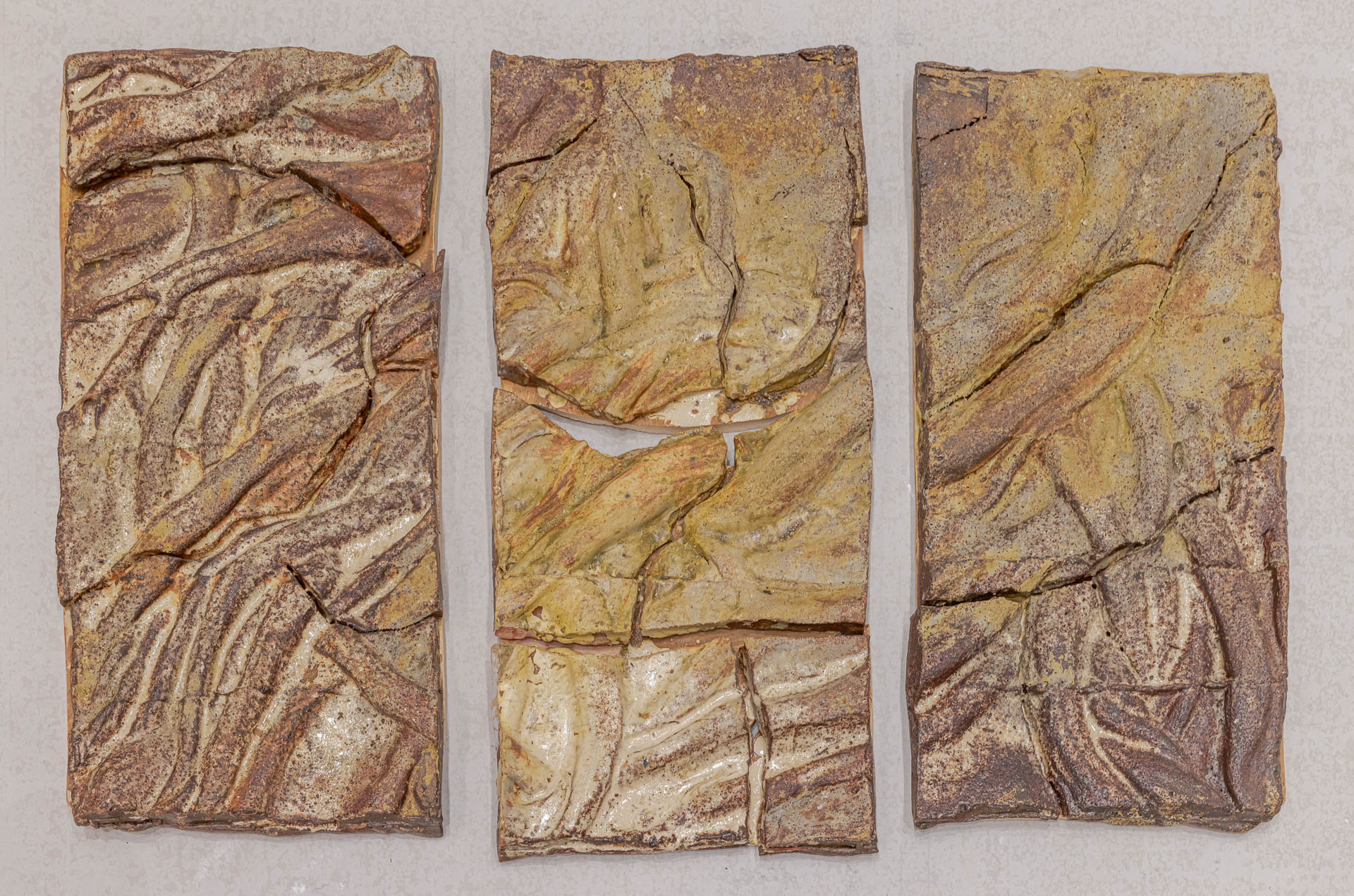
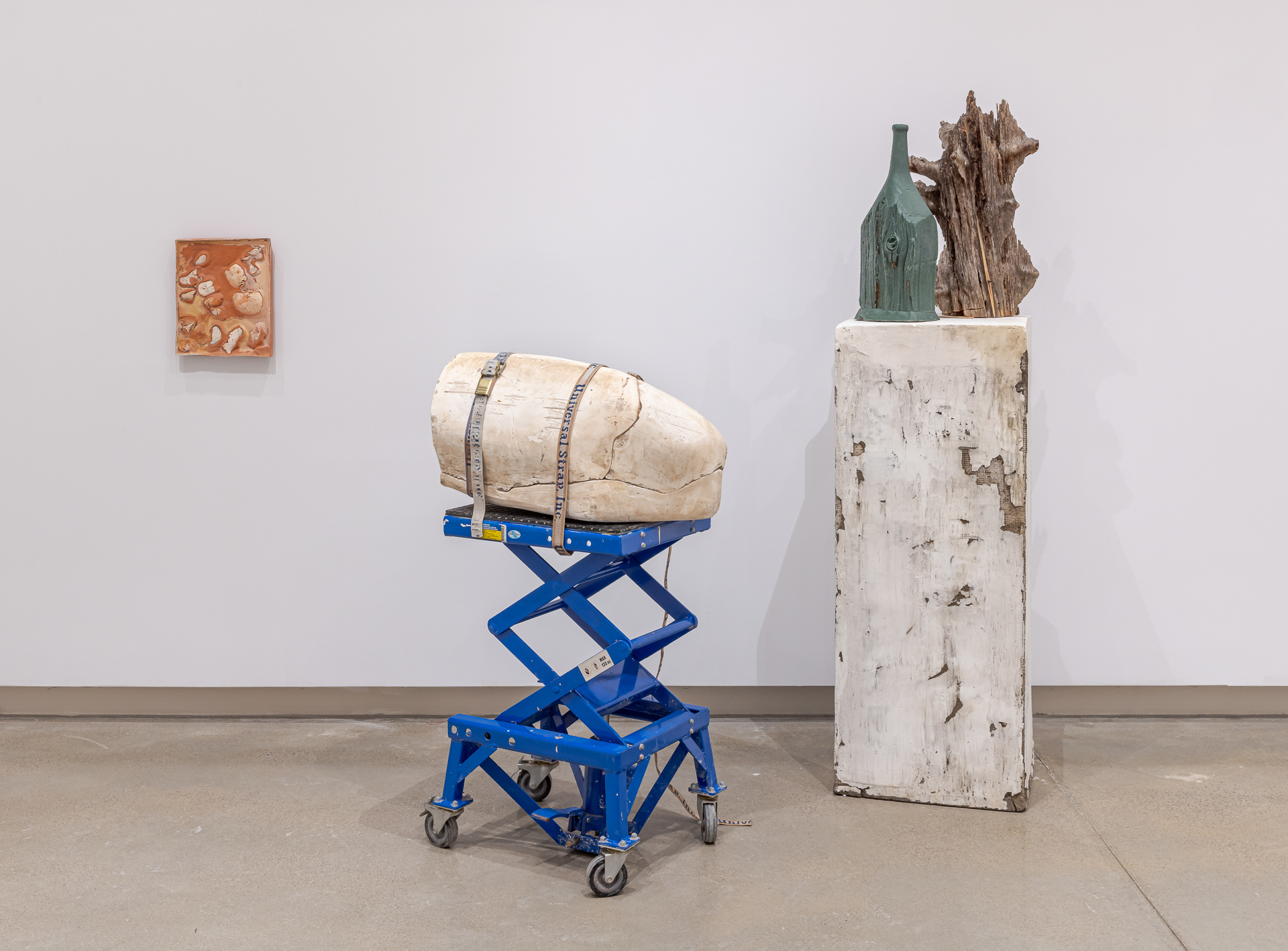
Bowie, too, cycles through material. Stone dust from carving becoming a core component of glaze applied to clay forms; plaster moulds prepared for ceramic forms becoming pieces in their own right. Forms once sculpture are repurposed as support for newer work. The work never really stays in one form for too long before it, or the form it took, is repurposed and redeployed. One gets the sense that all her discrete “works” are on their own paths of discovery: forming, deforming, and reforming anew in an endless cycle. The studio of D’Andrea Bowie is a place of continual becoming.
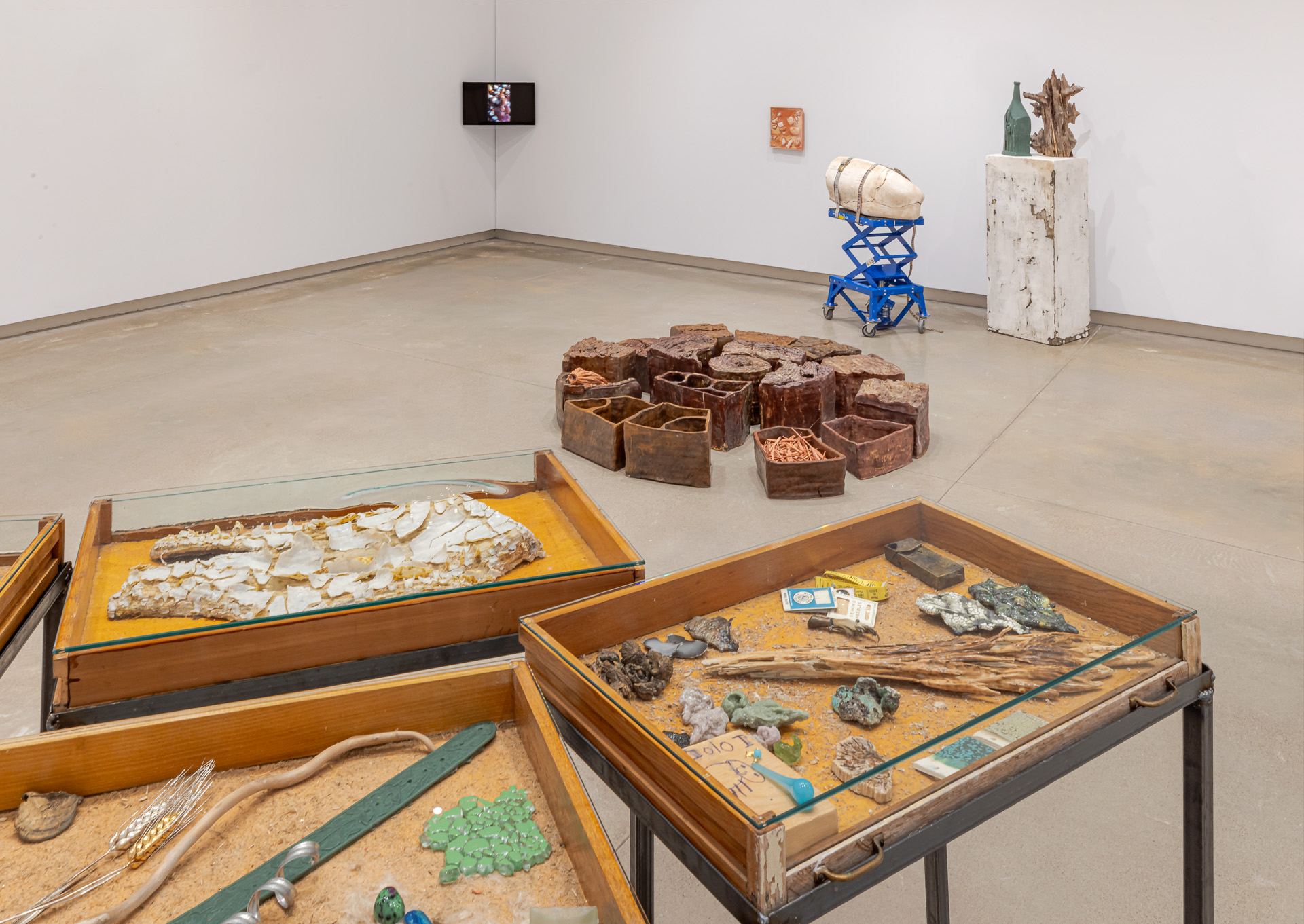
On the far side of the room, on a video monitor, there’s a cycle of short videos originally posted on Instagram under the @slowrealz account. Here we find snippets of texture, isolated from their surroundings but all together presenting a holistic view of the material activities of Bowie’s studio: clay and plaster slaking, water flowing, grasses growing, food in the process of being prepared. While none of these clips are significant in-and-of-themselves, they do present the materiality of what surrounds them in the gallery space. This materialism is a constant calling to attention of the present moment. The insignificance of each moment added together brings forth an awareness of our engagement with the world as it is.
This work, however, isn’t a naïve turn to mere formalist tropes. That the work is constructed from materials all locally sourced (a hundred-mile practice, to use framing from the slow food movement) is significant. There are also, crisscrossing the room, narrative arcs that tie these works together.
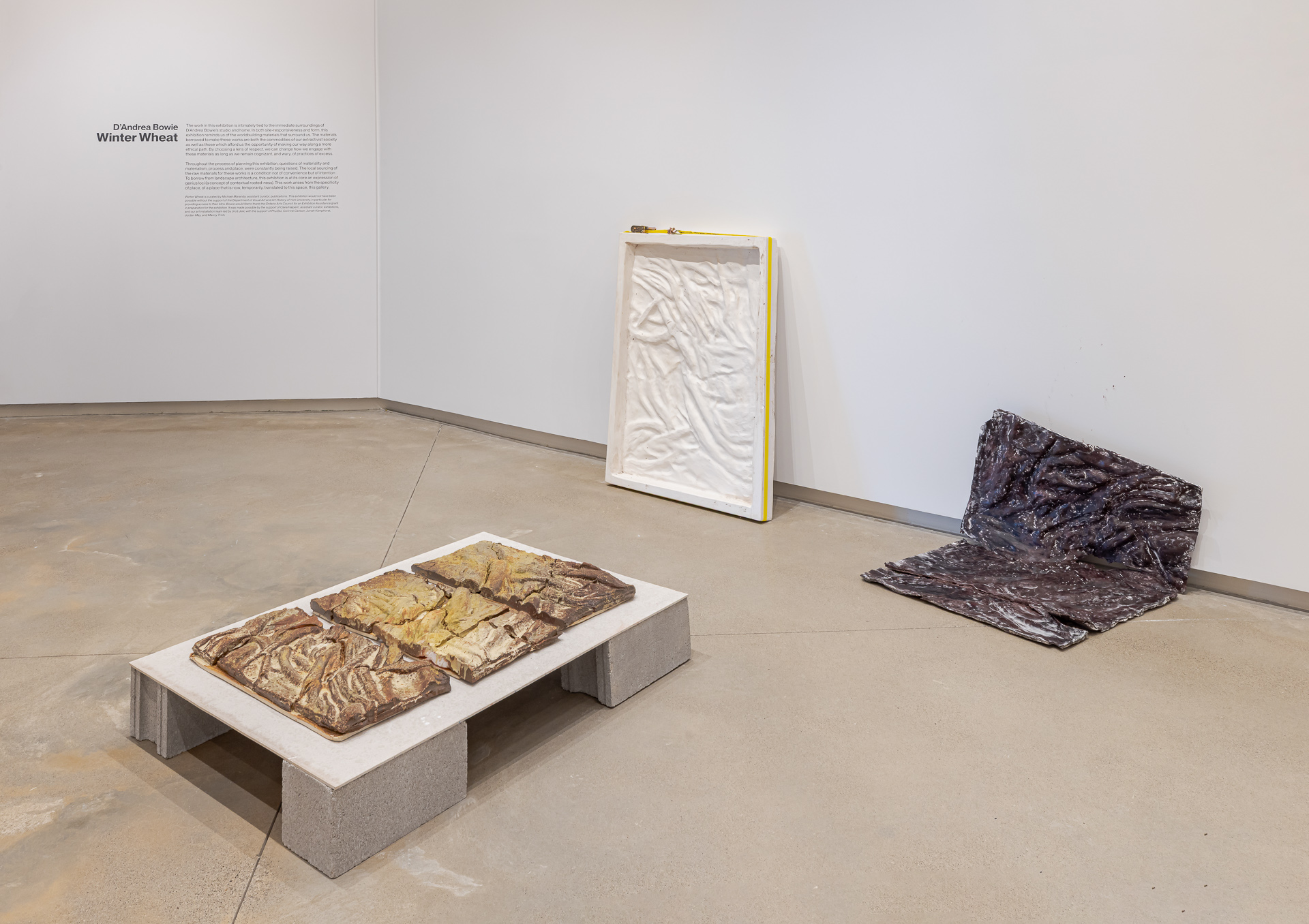
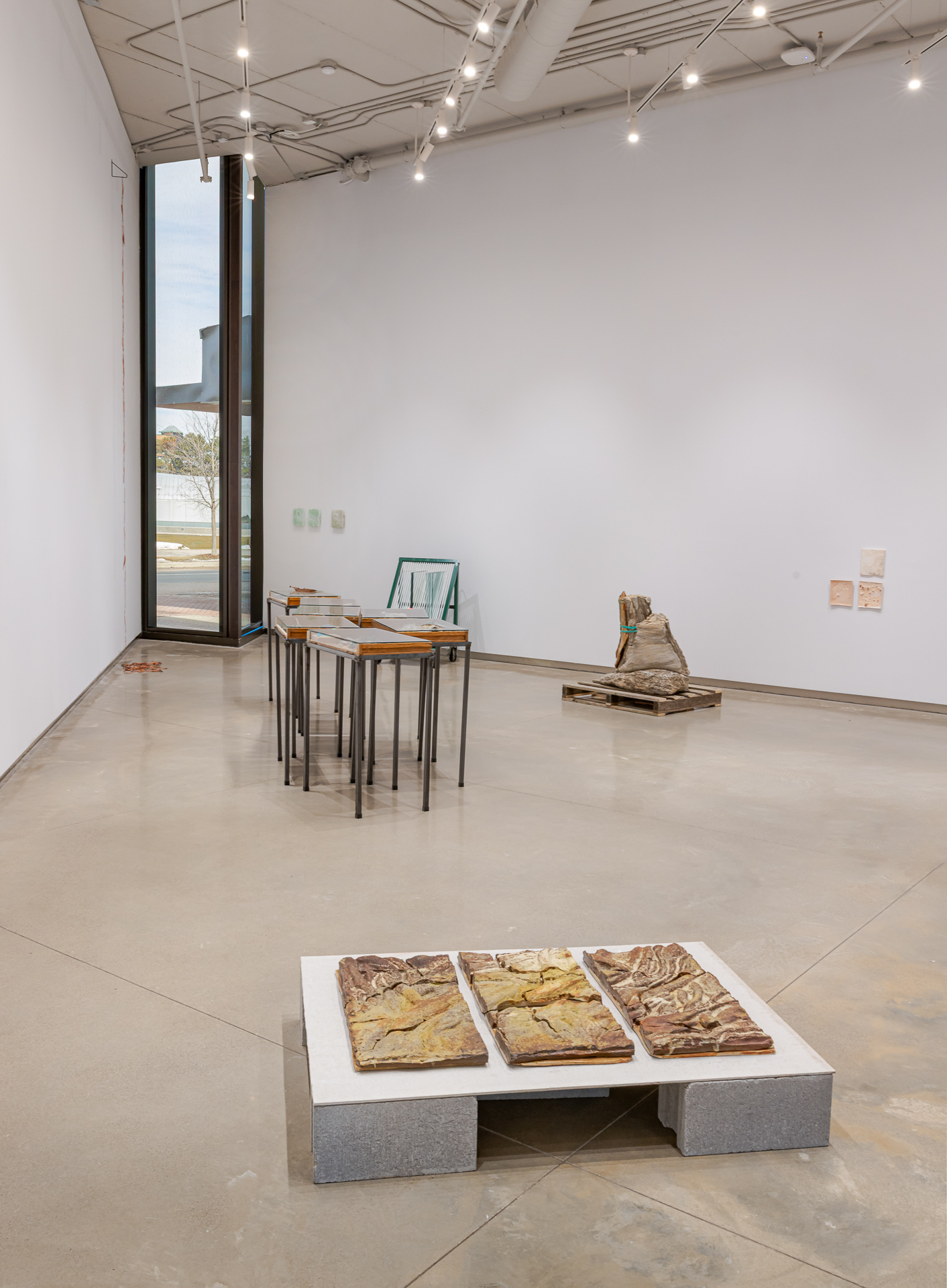
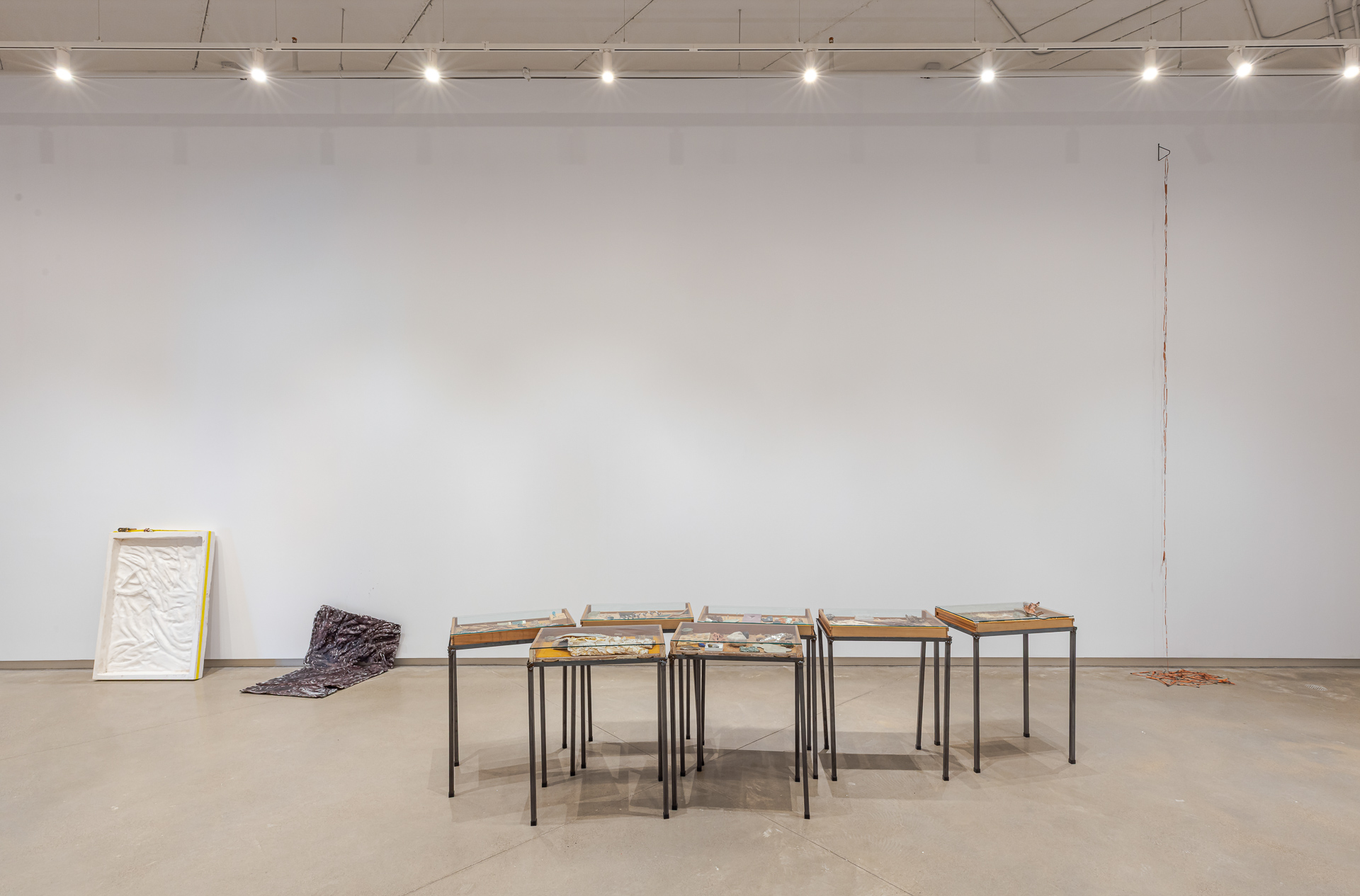
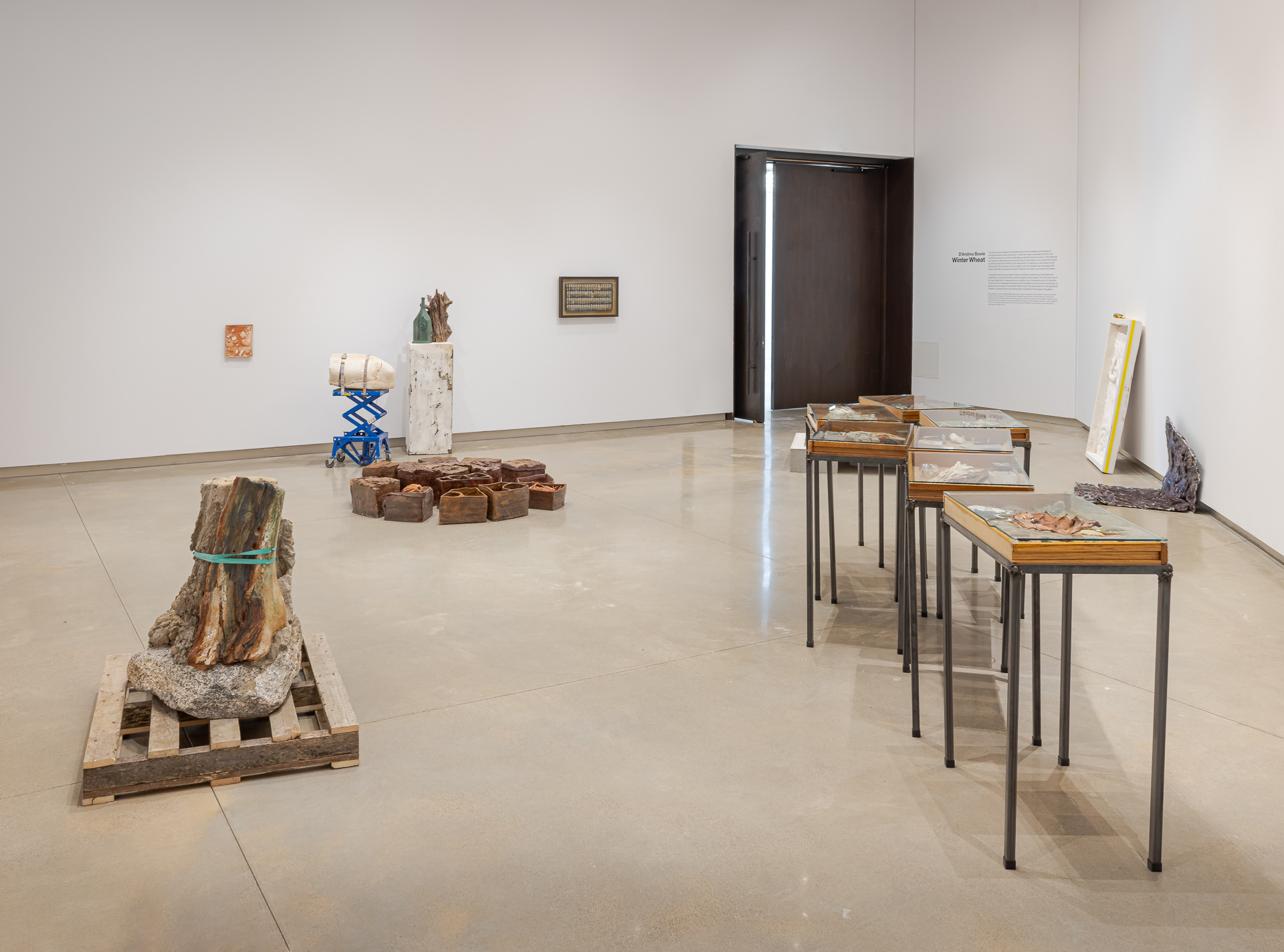
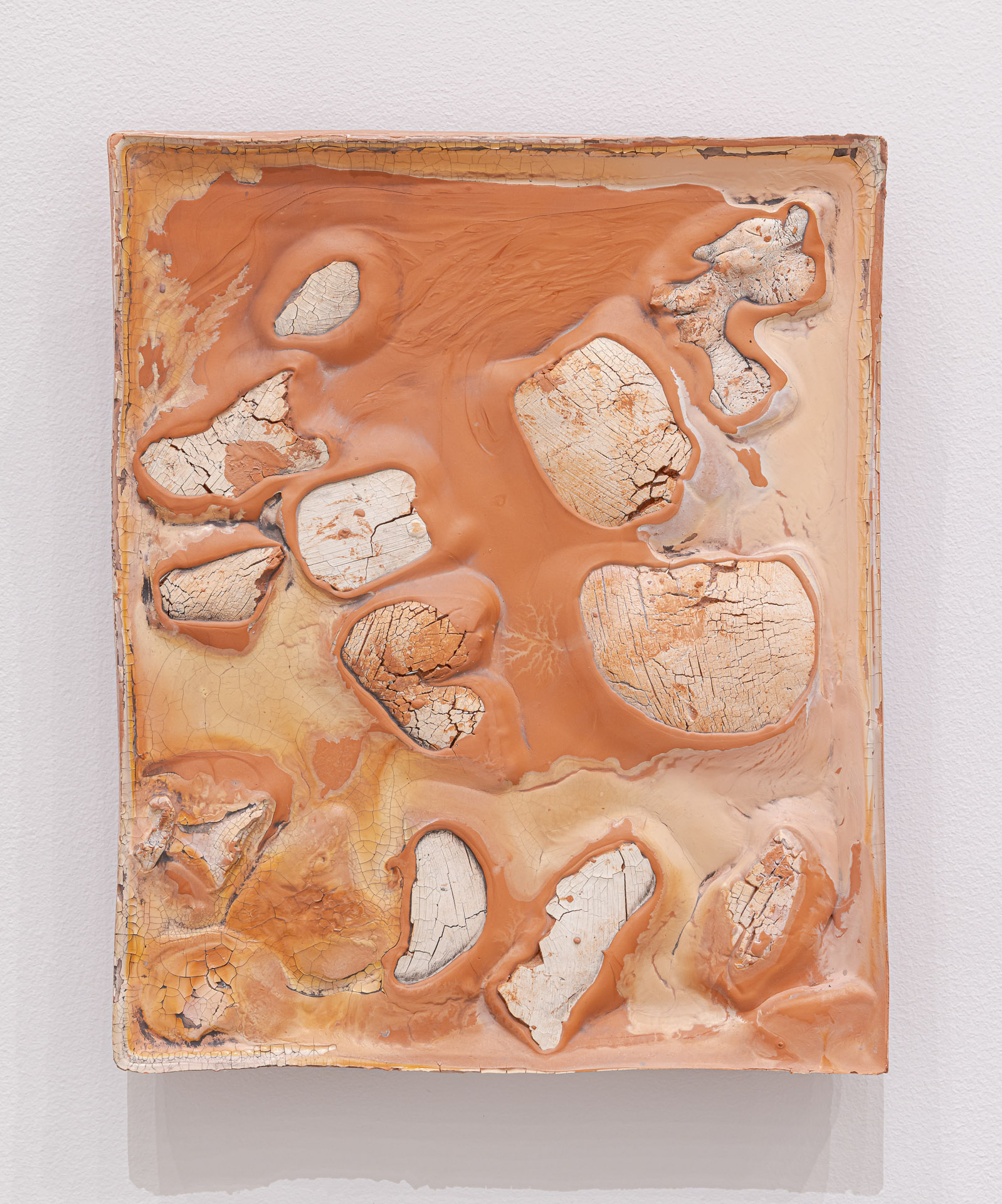
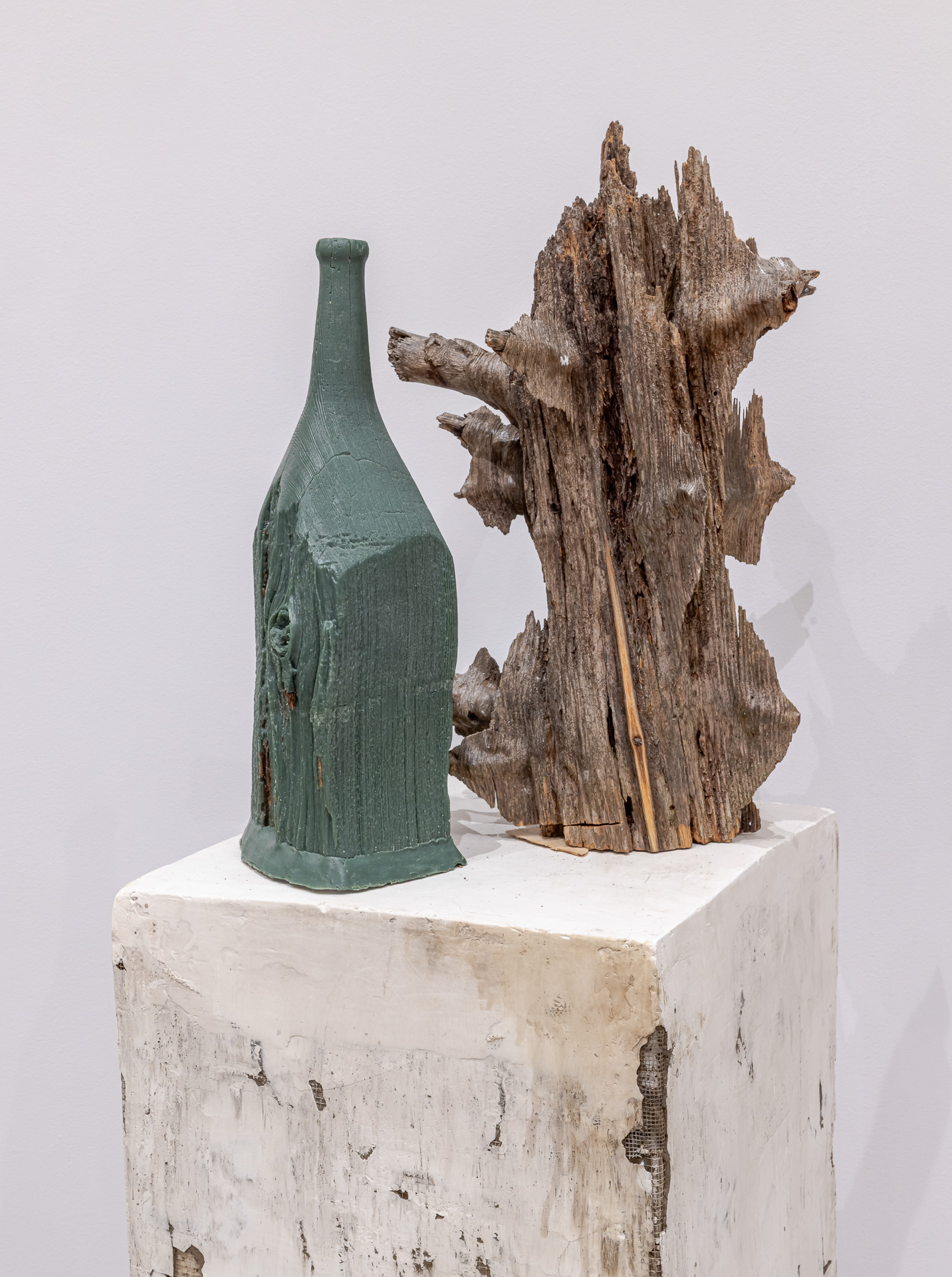
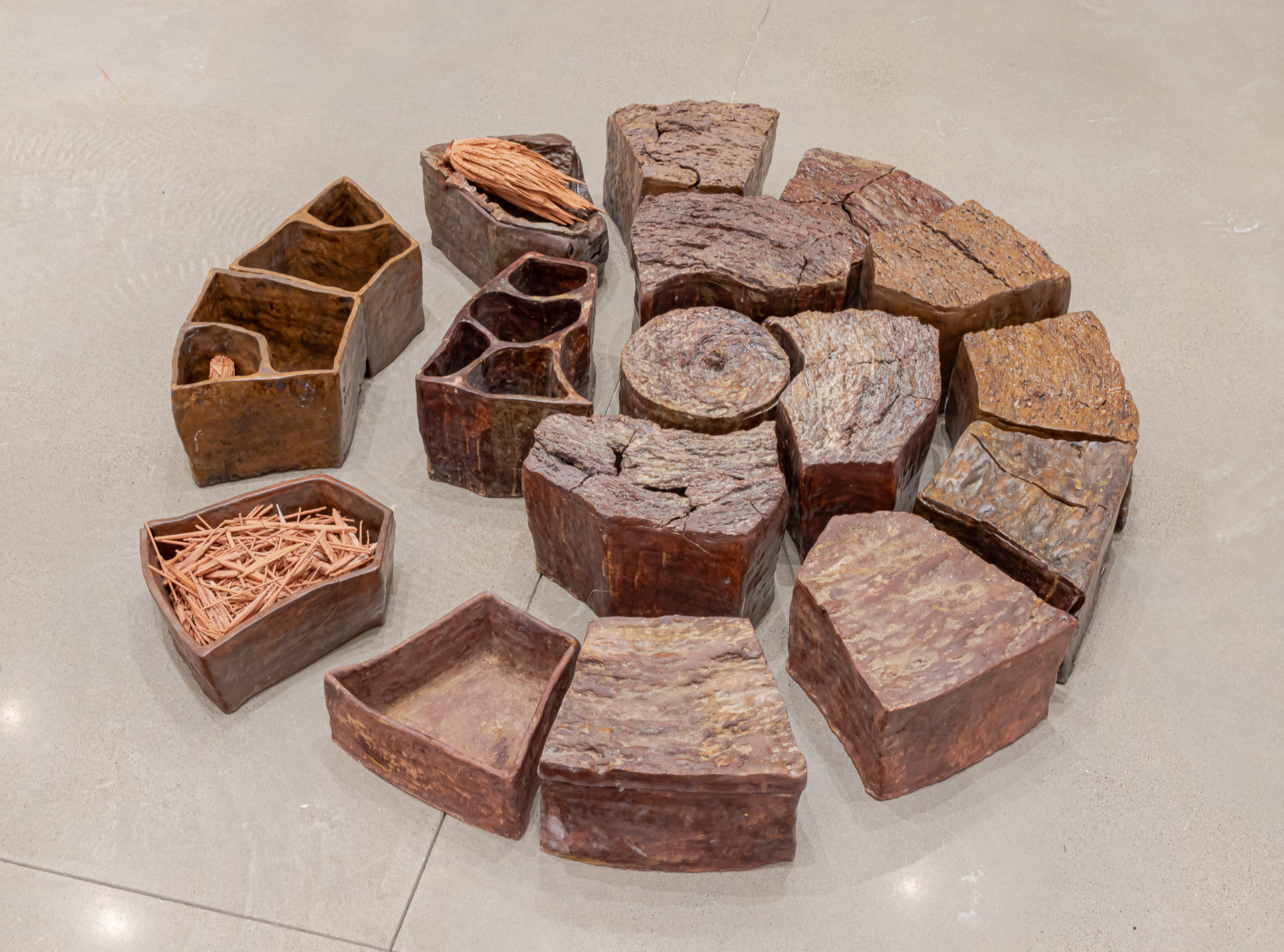
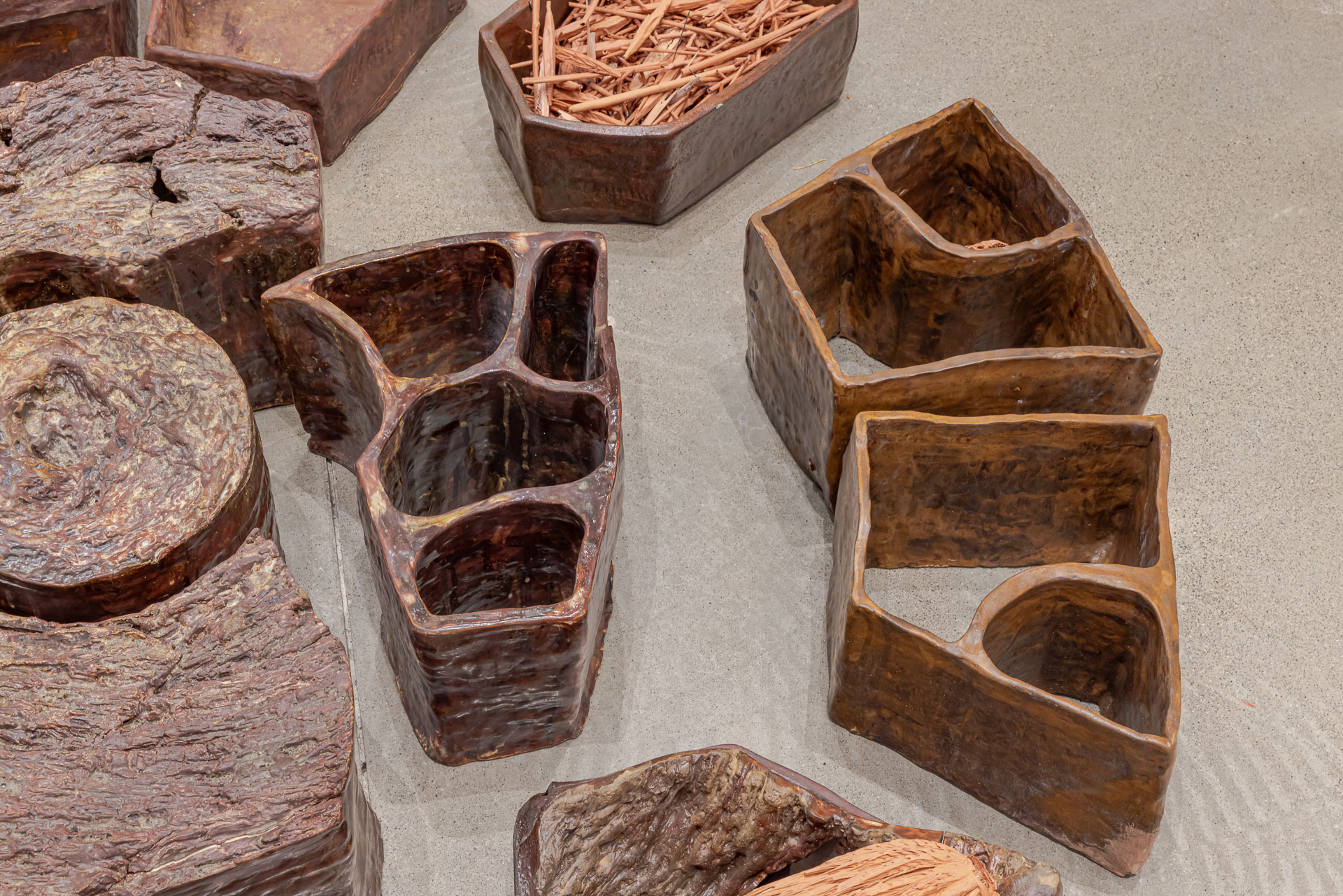
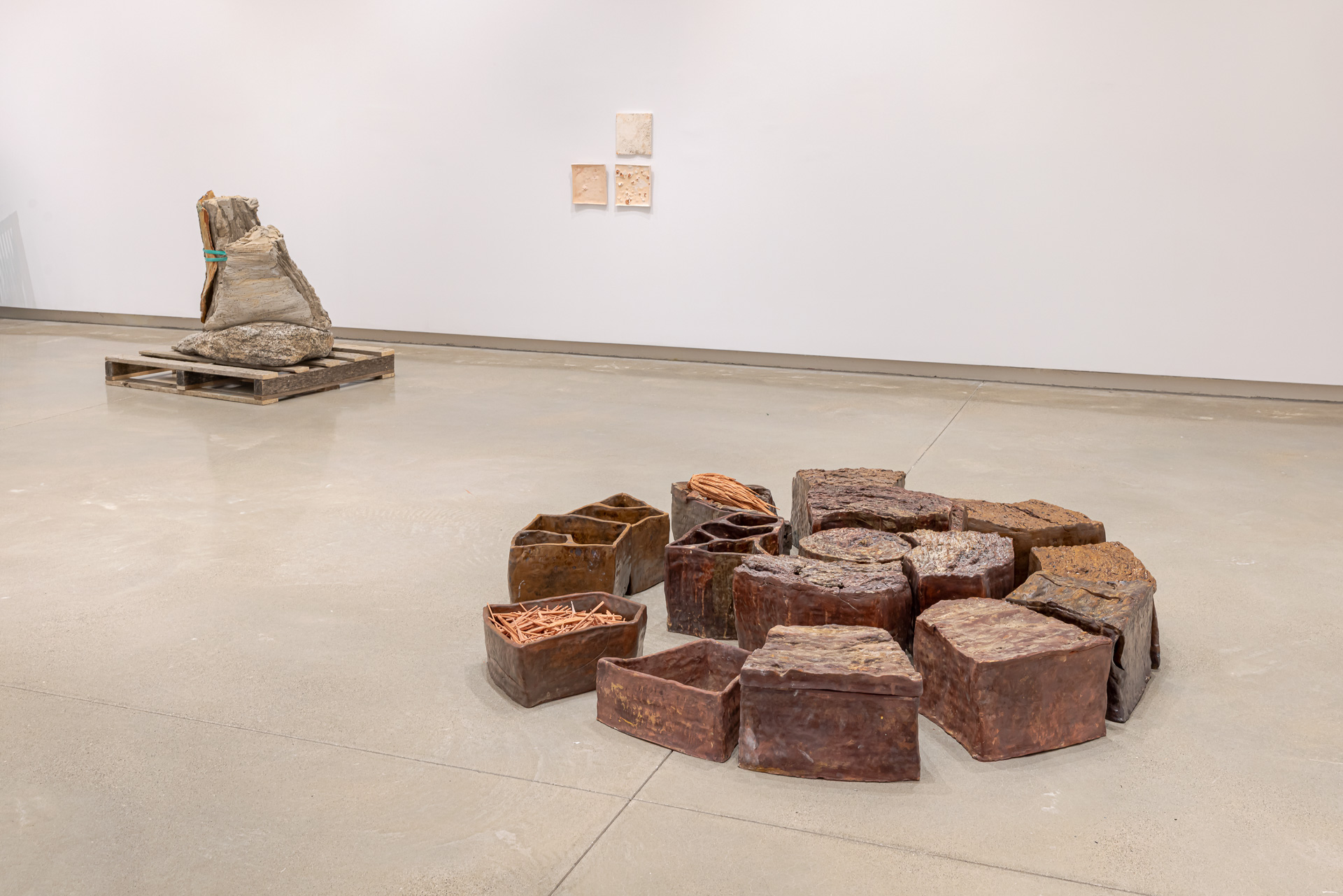
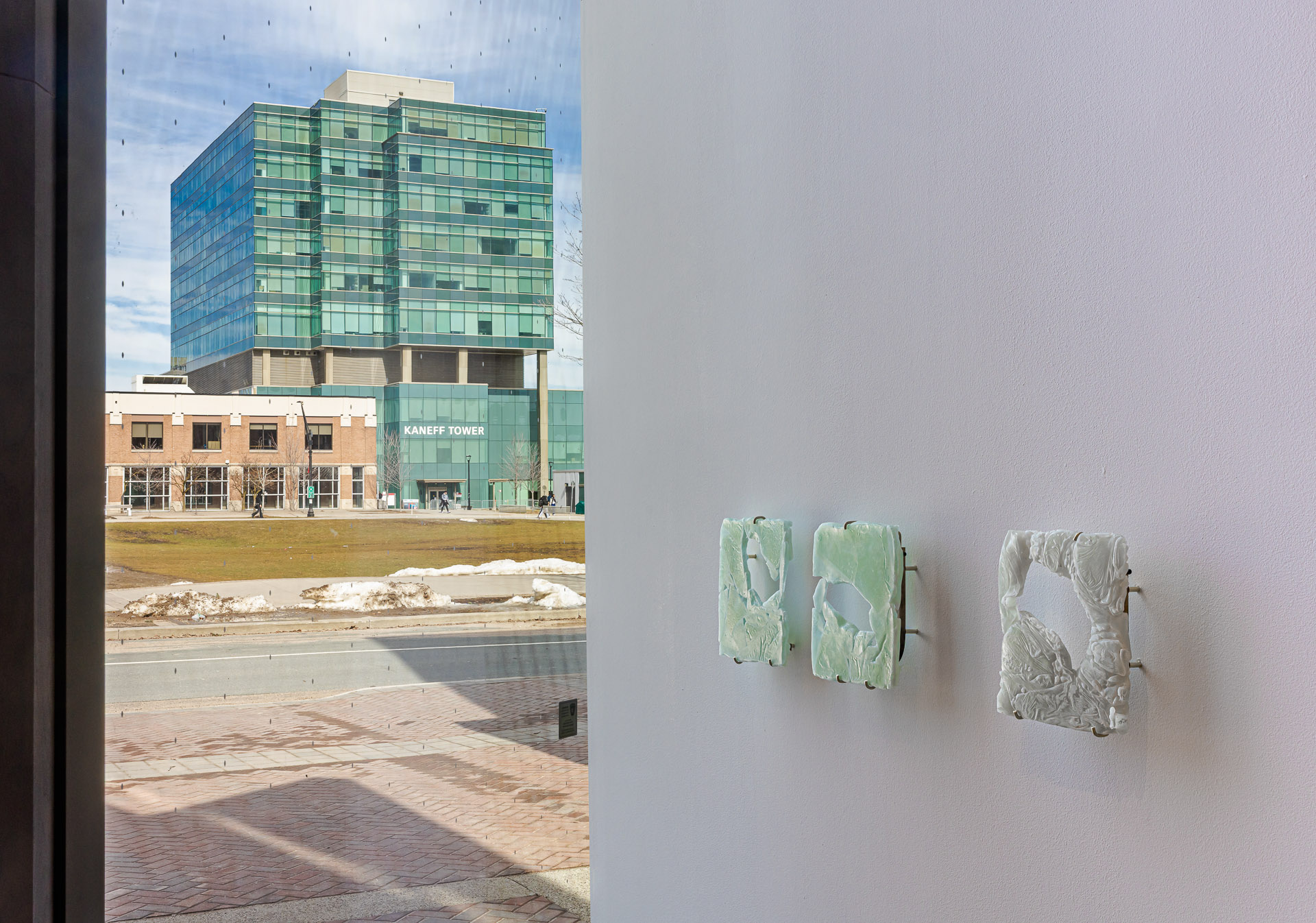
One of the main streams of linkage is in traces of the effects of extractivist practices, most obvious with Wheat Chain, 2025, which consists of stalks and ears of wheat dipped into slip and fired then finely woven onto the wires of a Gunter’s chain. This piece echoes monoculture agriculture, which has contributed to a widespread ecological calamity, through the inclusion of, specifically, the wheat, but there is also, in plain sight, the tools of the surveyor. Gunter’s chains are used by surveyors to measure land, done primarily in establishing claims of ownership. In Ring of Fire (make hay while the sun still shines), 2026, the round end of a bale of wheat straw has been cast in clay, angled to display its remarkable textures to the viewer. Of particular note, however, is the method of construction, with individual components divided up into a jigsaw-like pattern, mimicking the manner in which large millstones are constructed. Millstones that are, of course, vital in processing wheat to flour. Finally, Blanket, 2025, echoes the face-cut Algonquin limestone on the exterior wall of the gallery, the glaze on the ceramic part incorporating stone dust from the same quarry which supplied the gallery’s exterior façade.
This angle could be followed through in the other works present, but there’s a more subtle, more hopeful, reading also possible. This piece, in both its site responsiveness and its form, reminds us of the worldbuilding materials that keep us housed. The materials which make up the commodities of our extractivist society are also those which afford us the opportunity of making our way in a much more sustainable manner. Choosing a lens of respect can change how we engage with these materials, as long as we remain cognizant, and wary, of practices of excess.
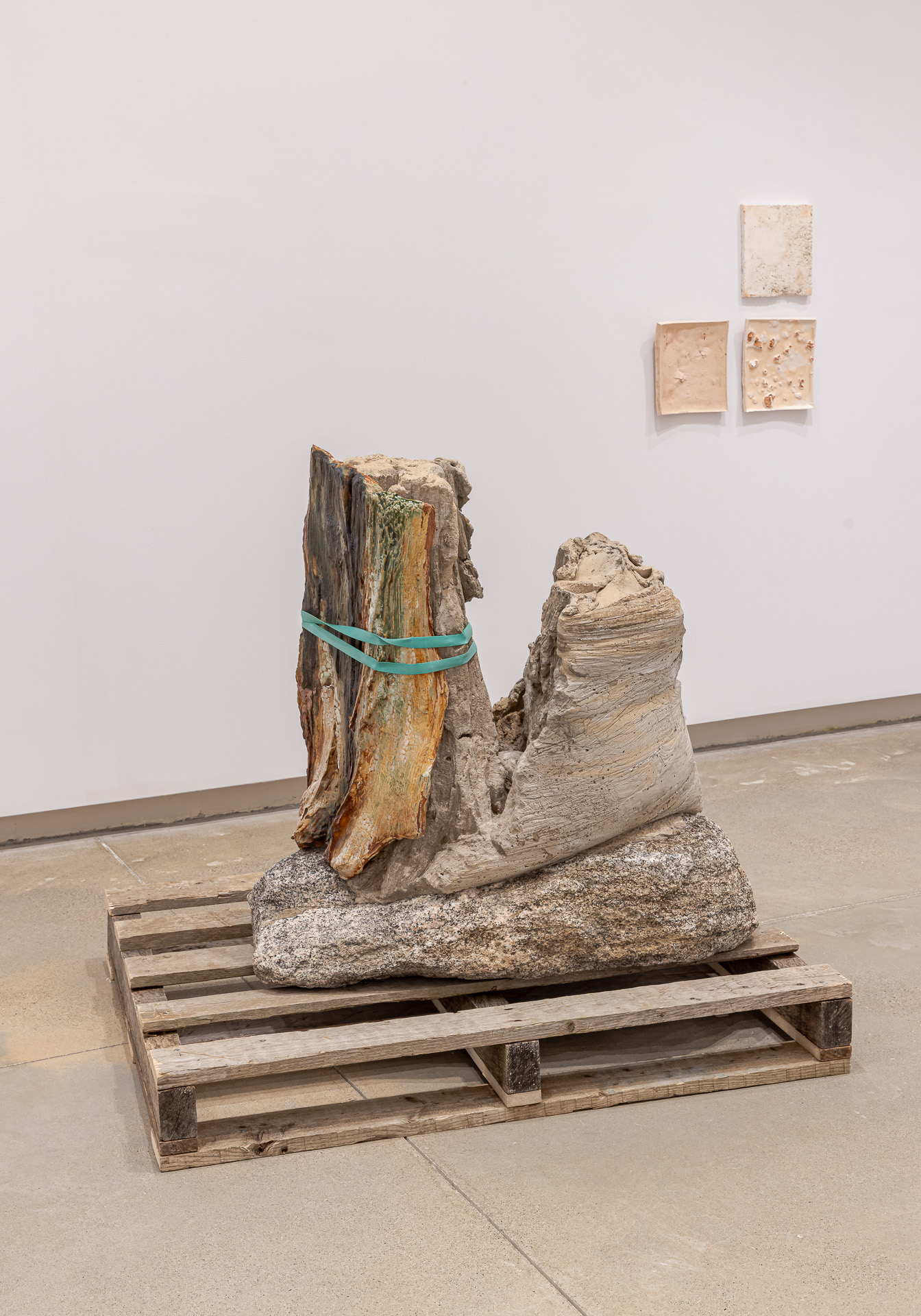
Throughout the process of working with Bowie on this exhibition, questions of materiality and materialism, process and place, were constantly being asked. The sourcing of the raw materials for these works being so close-at-hand is not of convenience but of intention. The model for the tree stump, replicated in numerous forms throughout the space, was chosen not because it just happened to be in her studio’s yard but because it was in her studio’s yard. It isn’t convenience; it’s genius loci (a concept of contextual rooted-ness from landscape architecture). This work arises from the specificity of place, of a place that is now, temporarily, translated to this space, this gallery.
It’s not just place that is being evoked but also, a result of a mediums (ceramics/glass) that are inherently process-based, both material and time. I bring up this melding intentionally, of course, to make a linkage with the thinking of Byung-Chul Han. His 2017 book, The Scent of Time, addresses our current obsession with the active life, identifying what is lost in the loss of lingering as a mode of living. In particular, he posits that knowledge without time is reduced to mere information: a resource without history, and subsequently without any real meaning aside from how it can be exploited.
While his thought concerns history, and how technology affects society, I take comfort that my deploying his ideas here is justified, knowing he initially trained as a metallurgist before turning to philosophy. Ceramics, particularly of the form that Bowie is practicing, embeds time into the material substrate of her work, especially as both form and, perhaps more importantly, substance recirculates throughout the progression of the pieces.
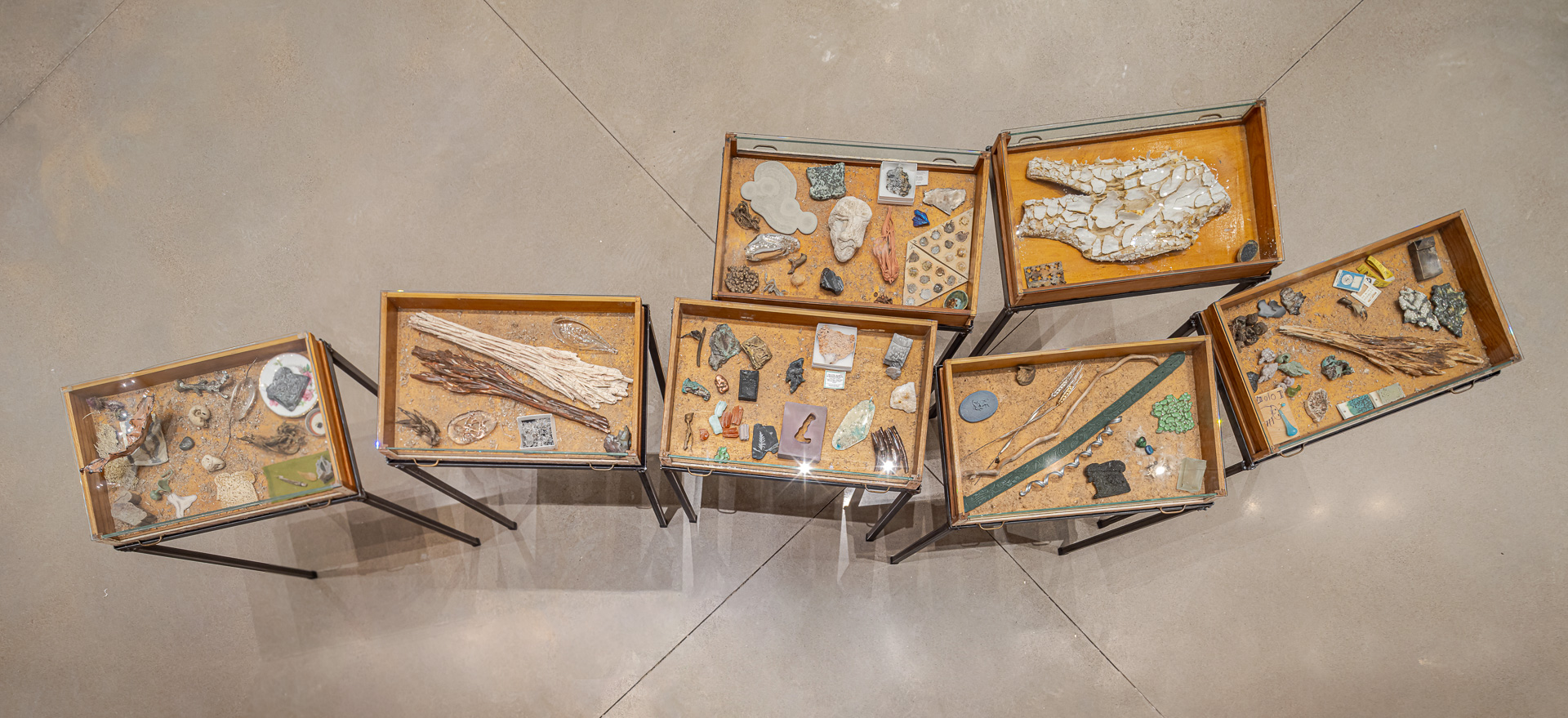
Which brings me to final two pieces: Index (inscendence), ongoing, and Glass Harp, 2026 (a found-object sculpture of a functional item that stores and transports glass in utilitarian workshops). While there are certainly formal similarities (the size of the glass covers for the trays match the glass-in-reserve in the harp), what really connects the two is in the trajectory that they illustrate. The Harp contains glass at-the-ready, poised for their next adventure. Functional and full of potential. The trays, on the other hand, are filled with an assortment of sample textures, treatments, and other such things such as test tiles that come from the developmental process of Bowie’s work. These are indeed functional items, playing the role of resource library within her studio. They are more telling of the investment of time and attention than the “finished” works surrounding them, enablers and collaborators in bringing these material manifestations from mute points of information to something else, something filled with plenitude.
If we follow along this suggested narrative, we might end up somewhere back near the @slowrealz, following daily wonders of engagement, unmediated, with the material world. In Bowie’s words, there is always a “longing to honour materials; to rediscover and re-story place by being in direct conversation with what is at hand.”

D’Andrea Bowie, Still from @slowrealz, 2025.
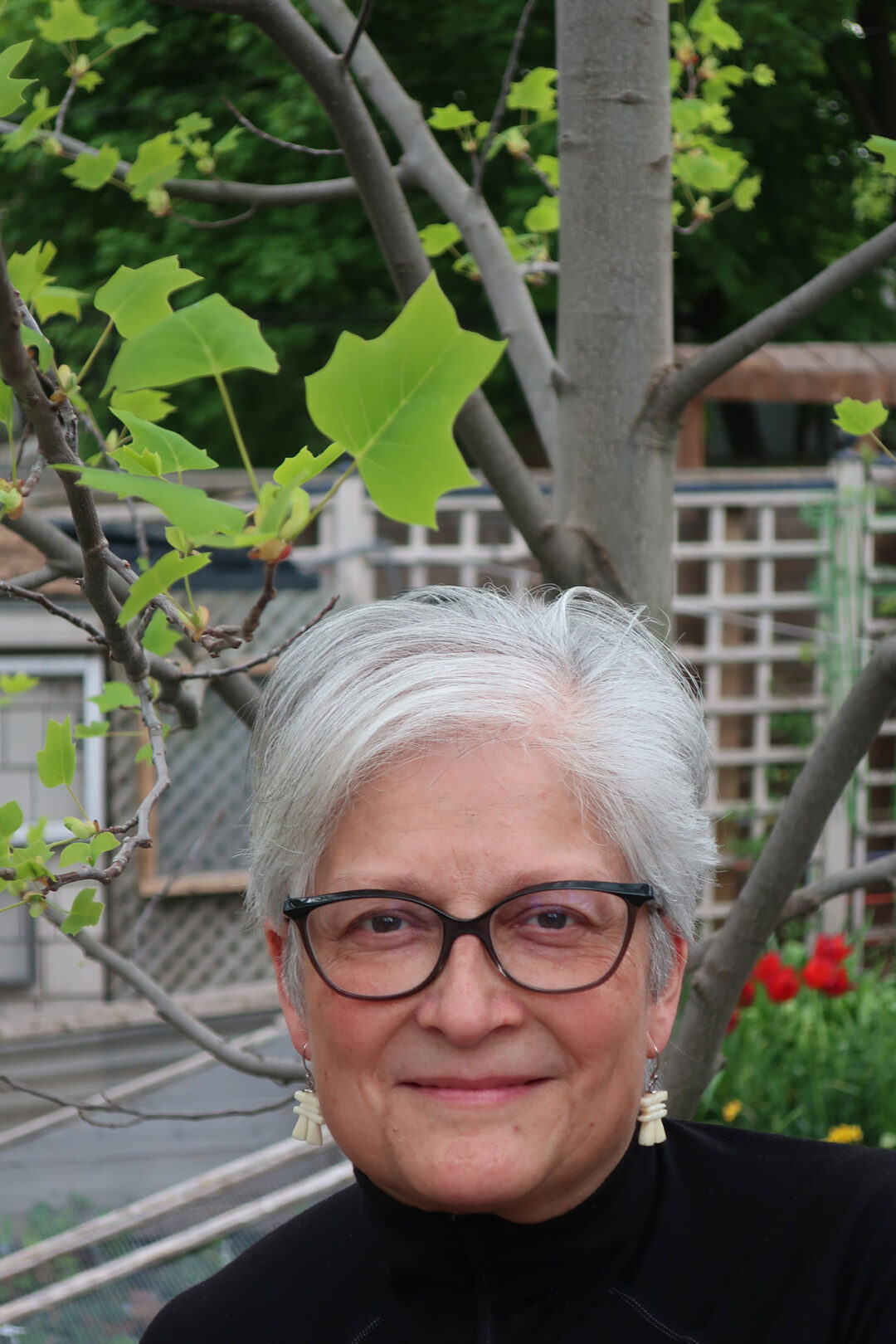
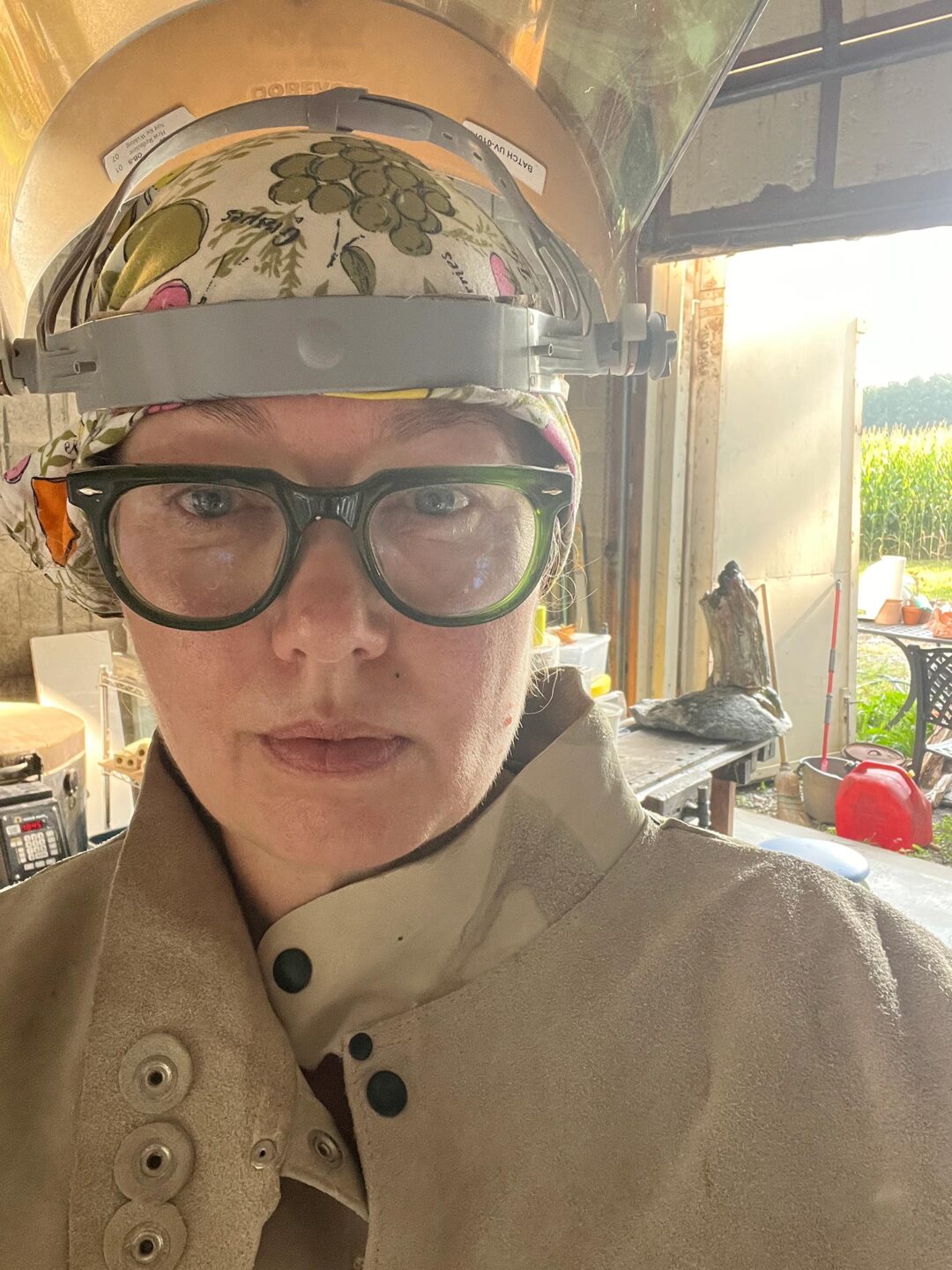
D’Andrea Bowie is an artist and educator who lives just outside Toronto, in rural Whitchurch-Highlands. Her work investigates the entangled relationships between land, body, and material through intersecting lenses of race, gender, capitalism, and settler colonialism—forces that simultaneously constrain and shape material conditions and meaning. She received her MFA from York University in 2023, having received a SSHRC Canada Graduate Scholarship and the Susan Crocker and John Hunkin Award in Fine Arts. Her work has been exhibited in various contexts, from solo exhibitions through group shows and community-based initiatives, in public, commercial, and alternative sites. She recently opened a solo exhibition at the Canadian Clay and Glass Museum. Bowie currently teaches at York University in the Department of Fine Arts.
Installation team: Uroš Jelić (lead), Phu Bui, Corinne Carlson, Jonah Kamphorst, Jordan May, Manny Trinh
Winter Wheat is curated by Michael Maranda, assistant curator, publications. This exhibition would not have been possible without the support of the Department of Visual Art and Art History of York University, in particular for providing access to their kilns. Bowie would like to thank the Ontario Arts Council for an Exhibition Assistance grant in preparation for the exhibition.
See also: